EV Charging, Warehouse Clubs, and Delivery Apps: The Overlooked Cash-Back Goldmine in Your ‘Grocery & Gas’ Budget
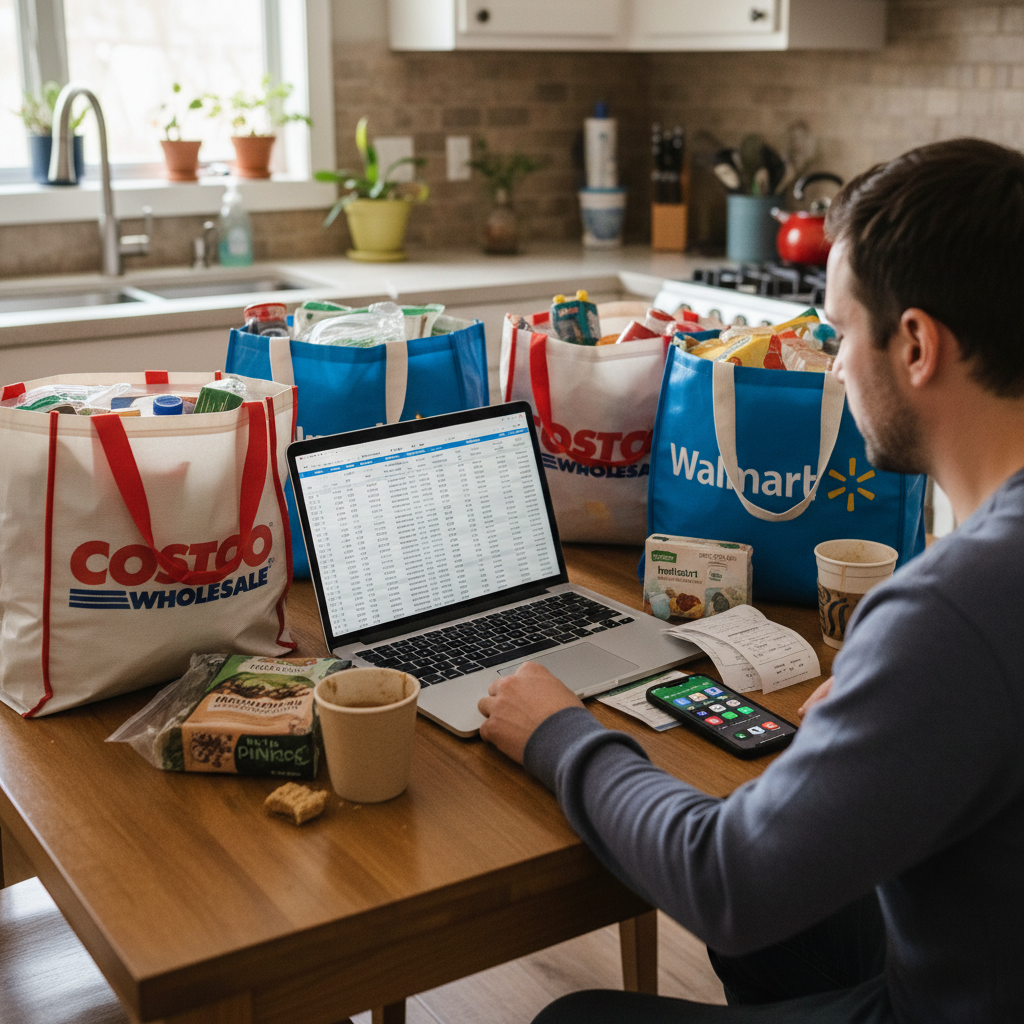
Think you’ve already “optimized” your grocery-and-gas rewards? If you’re charging EV fills, Costco runs, Walmart pickups or Instacart orders, there’s a good chance you’re quietly leaving hundreds of dollars on the table every year.
Card issuers know that we obsess over traditional categories like “supermarkets” and “gas stations” — but in 2025, a growing share of that spend has shifted to EV charging networks, warehouse clubs, big-box retailers, and delivery apps. The catch: these often code differently on your statement, which means your 6% or 5% cash back may silently drop to 1% if you’re not strategic.
The Coding Problem: Why Your 6% ‘Groceries’ Might Really Be 1%
To understand where you’re losing money, you need to understand merchant category codes (MCCs). These are how payment networks label a transaction — not based on what you bought, but where you bought it.
Here’s the key trap: a “grocery” card might define bonuses as U.S. supermarkets, which usually excludes Walmart, Target, wholesale clubs like Costco and Sam’s Club, and most delivery apps. Cards like the Blue Cash Preferred® Card from American Express famously offer 6% back at U.S. supermarkets on up to $6,000 per year, then 1% after, plus 3% back at U.S. gas stations and transit.[4] But those high rates generally do not apply at Costco or Walmart Neighborhood Market because of how those merchants are coded.[4]
Result: your “grocery” run at Costco might be earning just 1% while you assume you’re getting 4–6%.
Warehouse Clubs: Costco, Sam’s, BJ’s and the ‘Gas’ That Isn’t
Warehouse clubs are now core to many families’ grocery budgets, but they sit in a weird rewards gray zone. Most supermarket-focused cards exclude them — yet a few specialist cards absolutely crush it here.
Costco: One Card to Rule Gas, EV Charging, and Bulk Groceries
If you’re a Costco regular, the Costco Anywhere Visa® Card by Citi is almost mandatory. According to recent 2025 reviews, it offers:[2][3][5]
- 5% cash back on gas at Costco and 4% on other eligible gas and EV charging (including non-Costco stations) up to the first $7,000 per year, then 1%.
- 2% cash back on all Costco and Costco.com purchases (including groceries).[3]
- 3% back on dining and travel, 1% on everything else.[3]
Membership is required, but the card itself has a $0 annual fee. If you spend $500 a month on Costco groceries and household items, that’s roughly $120 per year in club-only rewards at 2% — before counting gas and EV charging.
Compared with a traditional supermarket card that gives you 1% at Costco, you’re effectively doubling your warehouse-club grocery yield while also locking in some of the best gas/EV charging rewards on the market.
Sam’s Club and BJ’s: Use a Generalist, Not a ‘Grocery’ Card
Sam’s Club and BJ’s frequently code as wholesale clubs too, not supermarkets. Instead of forcing a supermarket card here, many experts recommend pairing them with a strong flat-rate card like the Wells Fargo Active Cash® Card or Citi Double Cash® Card, both of which return about 2% cash back on everything with no annual fee.[2][3] That’s likely better than 1% from a category card that doesn’t officially cover wholesale clubs.
EV Charging: The ‘New Gas’ Category You Can’t Ignore
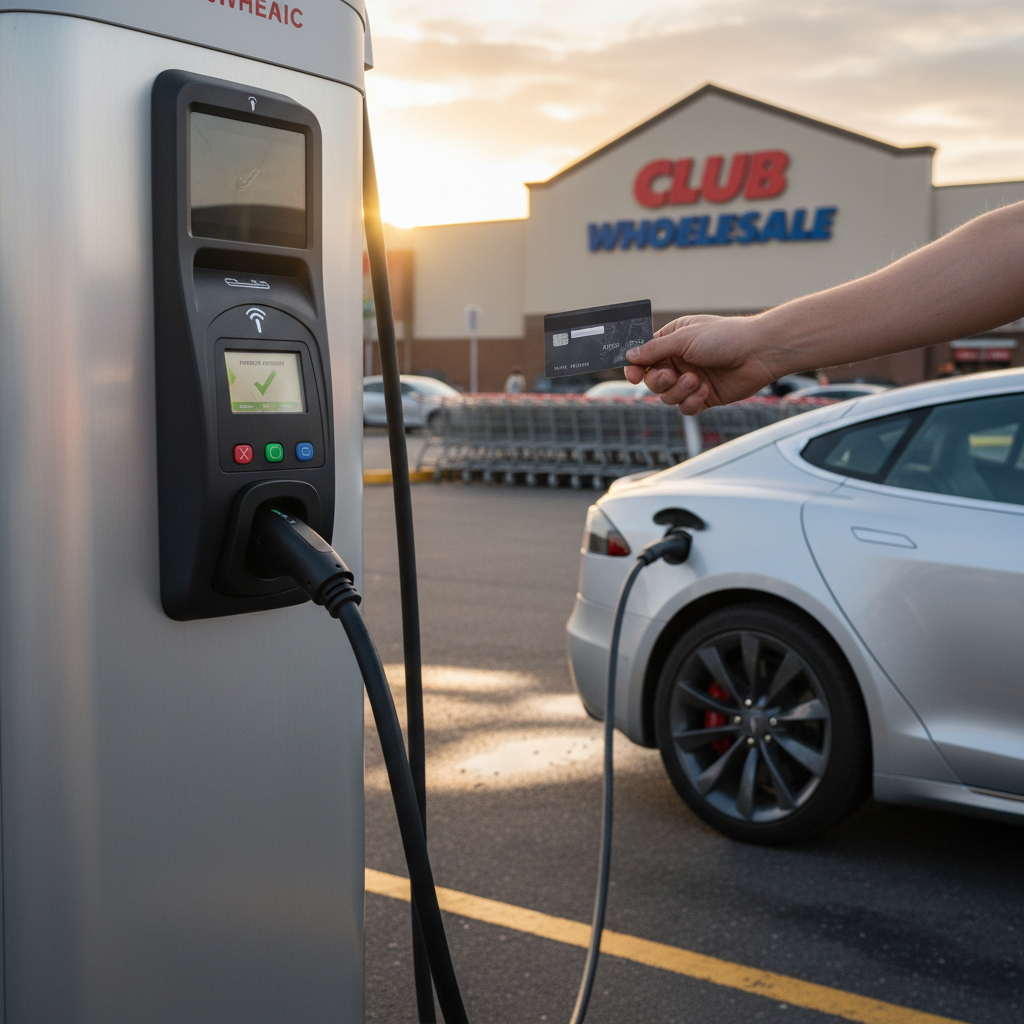
As EV adoption accelerates, networks like ChargePoint, Electrify America and Tesla Superchargers now account for a growing share of “fuel” spend — but many cards still treat them as generic purchases unless they specifically list EV charging or include it under gas and transit.
Cards That Explicitly Reward EV Charging
Two standouts for 2025:
- Costco Anywhere Visa® Card by Citi: 4% back on EV charging and non-Costco gas on up to $7,000 per year.[2][3] This is one of the few mainstream cards that clearly calls out EV charging in its top tier.
- Some newer rewards structures (including select issuer-branded or co-branded cards highlighted by Bankrate) now bundle EV charging with gas, transit, and rideshares at around 4% back, often capped monthly (for example, 4% back on gas, EV charging, and transit up to about $300 per month, then 1%).[4]
If your primary “fuel” spend is on EV charging, anchoring on these specialized cards can easily add $100–$200 per year in incremental rewards compared with a 1.5–2% flat-rate card.
Delivery Apps and Online Groceries: Where People Lose the Most
Instacart, DoorDash, Uber Eats, Walmart Grocery, Target Same-Day and Amazon Fresh have exploded post-2020. But they don’t consistently code as “groceries.” Many list as online retailers, delivery services, or dining, depending on the platform and partner store.
Step 1: Audit How Your Apps Code
Before choosing a card, run this quick 10-minute check:
- Place a small order with each app you regularly use (Instacart, Walmart, Target, Amazon Fresh, DoorDash, Uber Eats).
- Wait for the charges to post and check your card’s online activity for each transaction’s category (supermarket, restaurant, online retail, other, etc.).
- Screenshot or note the coding — this becomes your personal “cheat sheet” for which card to use with which app.
This one-time audit prevents the classic mistake of using a supermarket card on Instacart orders that your issuer treats as generic online shopping at 1%.
Cards That Quietly Crush Delivery and Online Groceries
Once you know how your apps code, you can plug them into the right card:
- U.S. Bank Cash+® Visa Signature® Card: lets you pick two 5% categories each quarter and one 2% category.[3][4] If your groceries routinely arrive via Instacart or Walmart.com, you can often choose categories like fast food or select online retailers to match how they code, snagging 5% back on up to $2,000 in combined 5% purchases each quarter.
- Citi Custom Cash® Card: automatically gives 5% back on your top eligible category each billing cycle on up to $500, then 1% after, with no annual fee.[1][3][4] Eligible 5% categories include grocery stores, gas stations, transit, dining, and more.[1][3] If delivery apps are your biggest line item in a month and they’re coded as grocery, dining, or transit, this card will automatically funnel 5% to them without any category selection work.
- Blue Cash Everyday® Card from American Express: offers 3% cash back at U.S. supermarkets, 3% at U.S. gas stations, and 3% on U.S. online retail purchases (up to $6,000 per year per category, then 1%), with no annual fee.[4] For Walmart.com, Target.com, and some delivery services that code as online retail, this 3% online category is a stealth win over many 1.5–2% competitors.
Walmart & Target Grocery: Why Your Supermarket Card May Fail
Walmart and Target are notorious for coding as discount or big-box retailers, not traditional supermarkets. That means:
- Your 6% supermarket card (like Blue Cash Preferred®) often drops to 1% at Walmart and Target in-store.[4]
- Online orders from Walmart.com and Target.com may code as online retail, not groceries — making a 3% online card or a 2% flat-rate card more lucrative.
In practical terms: if your “grocery” life revolves around Walmart Neighborhood Market, Target, or their apps, you want a combo like:
- Blue Cash Everyday® for 3% online retail (Walmart.com/Target.com) where eligible.[4]
- Wells Fargo Active Cash® or Citi Double Cash® at 2% everywhere else, including in-store runs that don’t qualify for category bonuses.[2][3]
Building a 3-Card ‘Modern Grocery & Fuel’ Setup
If you want a simple, high-yield 2025 setup that covers EV charging, warehouse clubs, delivery apps, and traditional groceries, consider this three-card system:
1. High-Octane Supermarket Card for Traditional Groceries
Use something like:
- Blue Cash Preferred® Card from American Express: 6% at U.S. supermarkets (up to $6,000 per year), 3% at U.S. gas stations and transit, 6% on select U.S. streaming, 1% on everything else (annual fee applies).[3][4]
Reserve this for true supermarket-coded stores (Kroger, Safeway, Albertsons, etc.). At $500 per month in eligible supermarket spend, you’re looking at about $360 per year in cash back before fees.
2. EV + Warehouse Workhorse
Pair it with:
- Costco Anywhere Visa® Card by Citi if you’re a Costco member: 5% on gas at Costco, 4% on other gas and EV charging up to $7,000 per year, 2% at Costco, 3% on dining and travel.[2][3][5]
This becomes your default card for EV charging networks, non-supermarket gas stations, and all Costco purchases (groceries, household staples, and pharmacy).
3. Flexible 5% or 2% Catch-All for Apps, Walmart, Target
Round it out with one of:
- Citi Custom Cash® to automatically grab 5% on your highest category up to $500 per month, perfect if in some months Instacart or Uber Eats dominates your budget.[1][3]
- U.S. Bank Cash+® if you’re willing to actively pick quarterly 5% categories matching how your apps and online retailers code.[3][4]
- Wells Fargo Active Cash® as a no-maintenance 2% everywhere fallback for Walmart, Target, Sam’s Club, BJ’s, and anything that doesn’t fall into a bonus category.[2][3]
Action Plan: How to Stop Leaving Rewards Behind This Week
If you want fast wins, follow this step-by-step checklist:
- Pull your last 3 months of statements. Highlight Costco, Sam’s, BJ’s, Walmart, Target, Instacart, DoorDash, Uber Eats, Amazon Fresh, and any EV charging networks.
- Note the coding and rewards rate. For each merchant, confirm whether it’s earning your advertised grocery/gas bonus or quietly defaulting to 1–2%.
- Identify your top 3 “leak” categories. Common culprits: Costco groceries only earning 1–2%, EV charging earning 1.5%, Instacart orders not coded as grocery.
- Match each leak to a specific card. For example, Costco → Costco Anywhere Visa®; EV charging → Costco card or another 4% gas/EV card; Instacart → Citi Custom Cash® if coded as grocery/dining, or U.S. Bank Cash+® as an online/fast-food category.
- Apply strategically. Start with the 1–2 cards that fix the biggest leaks first. Many of these products currently include welcome offers (e.g., $200 bonuses after a few hundred dollars in spend within 3 months on cards like Citi Custom Cash® or Wells Fargo Active Cash®), which can instantly boost your first-year yield even more.[1][2][3]
Don’t Treat 2025 Like 2015: Update Your Rewards to Match Your Life
Your groceries now arrive in bulk pallets from Costco, in blue bags from Walmart, or via a driver’s trunk. Your “gas” comes from a charging pedestal in a parking lot. If your card strategy is still built for a world of corner supermarkets and purely gasoline pumps, you are absolutely leaving money on the table.
Take one evening this week to audit your transaction codes, plug the leaks with the right mix of supermarket, warehouse, EV, and flexible-category cards, and set up a note on your phone that simply says: “Costco → Costco Visa, EV → Costco Visa/4% card, Instacart → Custom Cash/Cash+,” etc. The result: the same spending you’re already doing starts quietly refunding you hundreds of dollars a year — with zero lifestyle change.

Act now, while welcome offers and current cash-back structures are still generous. Issuers adjust categories all the time; locking in a smart lineup today is the safest way to make sure every warehouse haul, EV top-off and grocery delivery pays you back as much as possible.
Unlock Full Article
Watch a quick video to get instant access.