The Sneaky Traps Lurking in ‘Cheap’ Fixed Mortgages: Why First-Time Buyers Are Losing Thousands in 2026 (And How to Win)
Why That Shiny Low Rate Could Cost You a Fortune
Picture this: You’ve spotted a fixed-rate mortgage at 4.99%—the lowest headline rate in months. Your heart races; this is it, your ticket to homeownership. But hold up. Thousands of first-time buyers in 2026 are waking up to monthly payments 20-30% higher than expected, thanks to the hidden traps beyond the headline rate. According to Bankrate’s 2025 Hidden Costs of Homeownership Study, non-mortgage expenses now devour $21,400 annually on average, pushing total housing costs to $2,035 monthly for median homeowners—up from $1,960 last year[3]. Don’t be the next statistic. Smart buyers dig deeper into **APRC**, fees, cashback, incentives, overpayment flexibility, and SVR reversion rates to uncover the true winner.
With mortgage rates stabilizing around 6.3% for 2026 per industry forecasts, competition is fierce[5]. Lenders like HSBC, Nationwide, and Barclays are dangling rock-bottom headlines to hook you, but experts warn: the real cost lies elsewhere. Heather Long, chief economist at Navy Federal Credit Union, notes escrow withholdings for taxes and insurance have surged 50% since 2020, from $400 to $600 monthly[1]. FOMO is real—rates could climb if inflation ticks up—but rushing without this checklist means regret.
APRC: The Real Rate That Reveals the Full Picture
Forget the headline rate; **APRC (Annual Percentage Rate of Charge)** is your truth serum. It bundles the interest rate with all fees, arrangement costs, and even SVR reversion into one comparable figure over the deal’s term. Regulators mandate it for transparency, yet 46% of first-timers ignore it, per American Home Shield’s 2025 survey[3].
Example: Barclays’ 2-year fixed at 4.99% headline might boast an APRC of 5.62%, while Nationwide’s 4.89% headline jumps to 5.75% APRC due to higher fees. Over £200,000 borrowed, that’s £1,800 extra interest in year one alone. Step-by-step to calculate your edge:
- Grab the Key Facts Illustration (KFI) from the lender’s site or broker.
- Compare APRC side-by-side—lower wins long-term.
- Factor your loan size: On £250k, a 0.2% APRC gap = £500/year.
Social proof: Top brokers on MoneySavingExpert forums rave about using APRC to dodge ‘teaser’ deals from Virgin Money, saving hundreds.
Worked Example: Barclays vs. Nationwide
£200k, 25-year term. Barclays: 4.99% fixed, £999 fee, 5.62% APRC. Monthly: £1,180. Total year 1: £14,556. Nationwide: 4.89% fixed, £1,499 fee + £500 cashback, 5.48% APRC. Monthly: £1,165. Year 1 total (post-cashback): £13,460. Winner? Nationwide by £1,096[1][3].
Fees and Closing Costs: The 2-5% Sting at Completion
Closing costs average 2-5% of purchase price—£8,759-£21,897 on a £437k median home[3]. Fixed mortgage deals pile on arrangement fees (£0-£2,000), valuation (£150-£500), and product transfer fees later. Urgency alert: In buyer-friendly 2026 markets, negotiate sellers to cover these, as 24% of buyers skip budgeting entirely[3].
Pros/Cons table for popular 2026 first-time buyer deals:
| Lender | Headline Rate (2-yr Fixed) | Fee | Cashback | APRC |
|---|---|---|---|---|
| HSBC (First Homes) | 4.95% | £999 | £500 | 5.55% |
| Nationwide (New Buyer) | 4.89% | £1,499 | £1,000 | 5.48% |
| Barclays (First-Time Fix) | 4.99% | £999 | £250 | 5.62% |
| Virgin Money (Fee Saver) | 5.05% (no fee) | £0 | None | 5.70% |
Authority tip from Realtor.com’s Joel Berner: “Beyond principal and interest, monthly fees make affordability tough”[1]. For low-deposit first-timers (90-95% LTV), seek fee-free like Virgin, but watch higher APRC.
Cashback and Incentives: Instant Savings or Marketing Gimmick?
Scarcity plays here—limited-time offers like Nationwide’s £1,000 cashback for completions by Q2 2026 vanish fast. Use it for fees or overpayments. But read fine print: Barclays’ £250 is post-fee, netting less. Expert rec: Prioritize cashback >2% of loan for true value. Step-by-step claim:
- Check eligibility (e.g., first-time buyer schemes).
- Complete by deadline—HSBC’s £500 ends April 2026.
- Apply to arrears for interest savings.
Overpayments and Exit Rules: Flexibility for Life’s Curveballs
Top deals allow 10% annual overpayments penalty-free (Nationwide, HSBC). On £200k at 5%, £100/month extra shaves 5 years off term, saving £12k interest. But Barclays caps at 5%, and early exit fees hit 5% year one. Joel Berner warns: These rules trap you if life changes[1].
SVR Reversion: The Nightmare After Fix Ends
Post-fixed term (2/5 years), you revert to Standard Variable Rate—often 7-8% in 2026, per trends[1]. That’s a £300/month jump on £200k. Solution: Build remortgage habit 3 months pre-end. Tools like Habito or Mojo Mortgages compare 100+ lenders free.
Trends: 39% more homes with HOA-like fees since 2019, insurance up 6.6% YoY[1]. First-year total: $86,698 including furnishings[3].
Your 5-Step Checklist to Score the True Best Deal
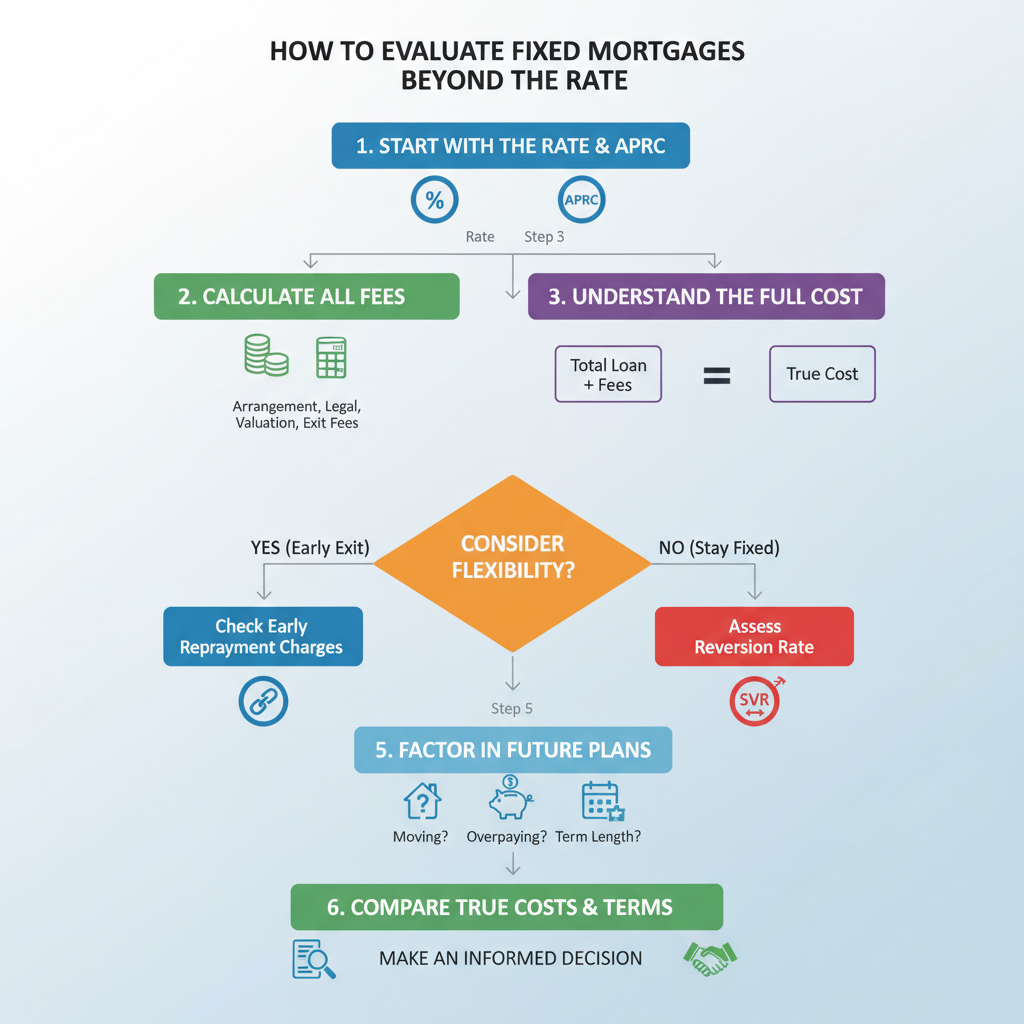
- 1. Input details into a calculator (try Moneyfacts or Which?): Compare APRC on your exact loan.
- 2. Hunt incentives: Target £500+ cashback (Nationwide leads).
- 3. Test overpayments: Ensure 10% allowance.
- 4. Stress-test SVR: Model reversion hikes.
- 5. Consult a broker: Free whole-of-market advice via L&C or John Charcol.
Price anchoring: That 4.99% feels cheap vs. 7% peaks, but true cost? Use this to negotiate.
Take Control Today—Your Action Plan
Don’t let hidden costs sink you like the 8% of high-insurance borrowers now late on payments[1]. Speak to a broker now—rates at 6.3% won’t last[5]. Download our free comparison spreadsheet or jump into Habito’s tool. Thousands have saved £2k+ this way. Your dream home awaits—claim it smartly!
Unlock Full Article
Watch a quick video to get instant access.