
From Stuck to Unstoppable: How 90-Day Tech Accelerators Are Launching Professionals Into AI, Cybersecurity, and Cloud Roles (2026 Guide)

The Tech Skills Gap Is Real—But These Accelerators Are Closing It Fast
You’ve spent years building expertise in one tech domain. But the market has shifted. AI is exploding. Cybersecurity roles are paying $150K+ entry-level. Cloud architecture is the future. And you’re wondering: can I actually make this pivot without starting over?
The answer is yes—if you choose the right accelerator program. In 2026, specialized career accelerators designed specifically for working tech professionals are proving that reskilling doesn’t require a complete reset. Instead, it requires strategic guidance, real-world projects, and access to decision-makers in high-growth fields.
Here’s what you need to know about the fastest-growing tech accelerators reshaping careers right now.
Why 2026 Is the Year of Specialized Tech Accelerators
The landscape has changed dramatically. Generic “career development” programs don’t cut it anymore. Employers want proof of applied skills. They want to see certifications from recognized platforms. They want to know you’ve worked on real problems with real companies.
That’s exactly what modern career accelerators deliver. Programs like The Washington Center’s Cybersecurity Accelerator (March 12-15, 2026, in Washington D.C.) connect participants directly with leaders from CISA, U.S. Department of Defense, United States Cyber Command, FBI, and Amazon Web Services. This isn’t theoretical learning—it’s direct access to the people making hiring decisions.[1]
Similarly, The Global Career Accelerator, offered through American University and University of Michigan partnerships, has helped 10,000+ students transition into high-growth tech roles. Recent data shows 95% of alumni now in the workforce say the program has been beneficial to their careers.[3][4] That’s not luck. That’s strategic positioning.
The Three Hottest Tech Specializations in 2026
1. Cybersecurity: The Fastest-Growing, Highest-Paying Pivot
Cybersecurity roles are experiencing unprecedented demand. The Cybersecurity Accelerator Program reports that 90% of past participants agree the program helped them develop concrete career plans, while 94% found the experience genuinely valuable.[1]
What makes cybersecurity accelerators different? They combine technical workshops on threat detection, incident response, and vulnerability management with professional development in networking and critical thinking. You’re not just learning tools—you’re learning how to think like a security leader.
The program structure typically includes:
• Site visits to federal cybersecurity agencies
• Direct conversations with hiring managers from AWS, DOD, and CISA
• Hands-on labs with current industry tools
• Networking with 200+ fellow professionals pursuing cybersecurity careers
Elligibility is straightforward: be 18+, have government-issued ID (REAL ID preferred), and commit to full participation. Scholarships are available for eligible students demonstrating financial need.[1]
Timeline: Most cybersecurity accelerators run 4-7 days intensively, then provide ongoing mentorship. The Washington Center’s program runs March 12-15, 2026—meaning you could have new career momentum before April.
2. AI/ML Engineering: Where Demand Exceeds Supply
AI and machine learning roles are paying 20-40% premiums over traditional software engineering. But here’s the catch: most professionals don’t have structured AI experience.
AI2 Incubator (from the Allen Institute for AI) addresses this gap with rolling admissions and funding up to $600K on a SAFE plus significant cloud credits. While technically focused on founders, their applied-AI methodology is being adopted by career accelerators targeting employed professionals.[2]
The key to AI acceleration is hands-on projects. You need to:
• Build at least 2-3 complete AI projects from problem definition to deployment
• Work with real datasets and production tools
• Get feedback from people currently shipping AI in industry
• Understand the business case, not just the math
Expect 12-16 weeks for a solid AI/ML career transition. Some accelerators compress this to 8 weeks for professionals with strong foundational CS skills.
3. Cloud Architecture: The Most Accessible Pivot
Cloud skills (AWS, Azure, GCP) have the lowest barrier to entry among high-paying specializations. A mid-career professional can credibly pivot to cloud architecture in 12 weeks with the right program.
What matters: certification (AWS Solutions Architect Associate or equivalent), real project experience, and understanding cloud cost optimization. Most accelerators include lab access to cloud platforms and guidance on certification exam strategy.
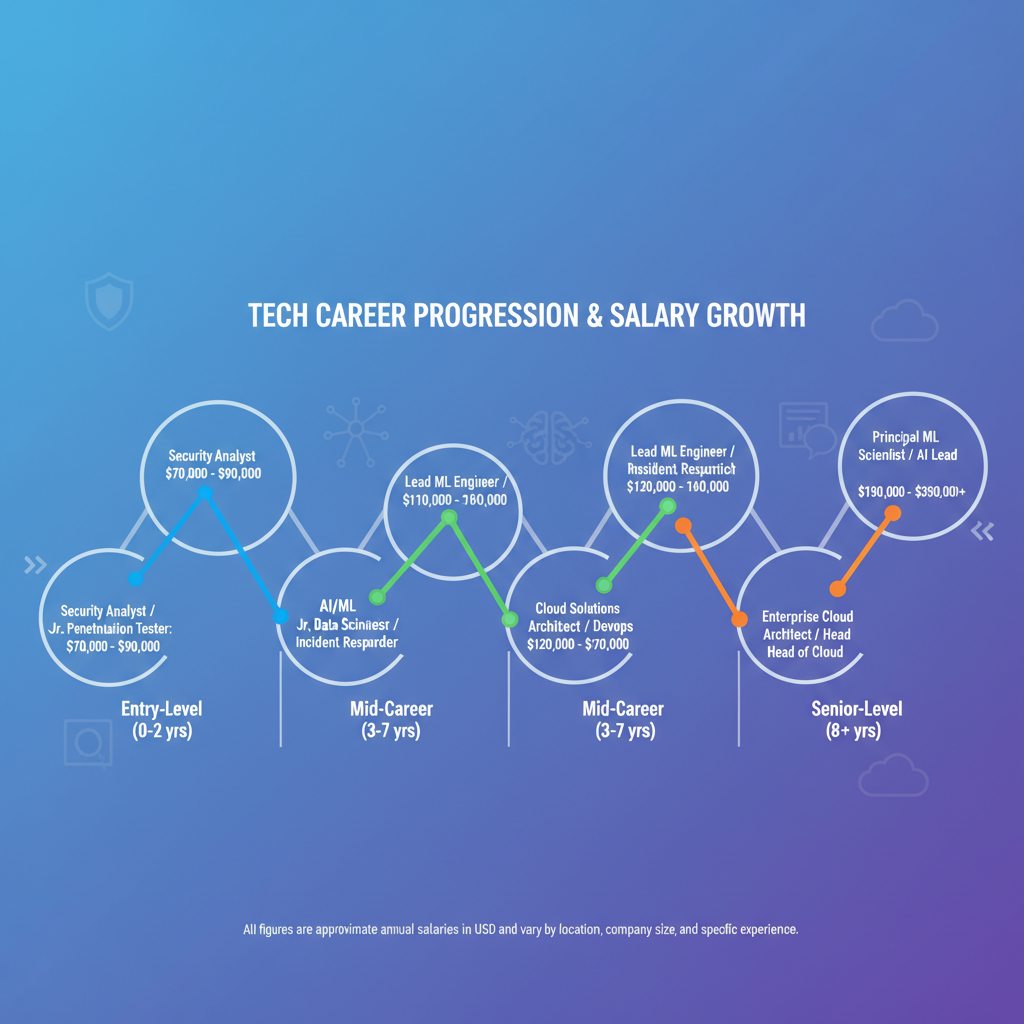
The financial upside is significant. Cloud architects in 2026 command $140K-$180K salaries, with strong demand continuing through 2027.
The 90-Day Accelerator Roadmap: What to Expect
Weeks 1-3: Foundation & Skill Bridging
You’ll assess your current skills and identify gaps. Most programs use diagnostic assessments to personalize your learning path. If you’re a backend engineer transitioning to AI, you’ll focus on Python data science libraries. If you’re moving into cloud from on-premises infrastructure, you’ll learn cloud-native architecture patterns.
Weeks 4-8: Core Technical Projects
This is where real learning happens. You’ll work on 2-3 guided projects that mirror actual job responsibilities. For cybersecurity, this might be setting up a security operations center (SOC) lab. For AI, building a recommendation engine. For cloud, architecting a multi-region deployment.
Weeks 9-12: Capstone & Job Readiness
You’ll complete a capstone project, prepare your portfolio, and get intensive interview coaching. Many programs include mock interviews with actual hiring managers from partner companies.
Throughout, you’ll attend 1-2 networking events weekly. This is critical. The best career accelerators aren’t just about learning—they’re about being seen by decision-makers.

Pricing, Scholarships, and ROI
Career accelerator costs vary significantly:
• Specialized 4-day programs (like Cybersecurity Accelerator): $1,500-$3,500, with scholarships available
• Semester-long university programs (American University, Michigan): $3,000-$6,000, eligible for financial aid and often credit-bearing
• Intensive 12-week programs: $5,000-$15,000
• Equity-free programs (Google for Startups Accelerator in MENA): $0, plus up to $350K in cloud credits
The ROI calculation is simple: if you’re currently making $100K and successfully pivot to a $140K cybersecurity or cloud role, you’ve paid back a $5,000 investment in 2-3 months. Most participants see salary increases of $20K-$50K within 12 months of completion.
Scholarships and financial aid are available, particularly for programs run by universities or nonprofits. The Cybersecurity Accelerator specifically notes that scholarships are available for eligible students demonstrating financial need.[1]
How to Choose the Right Program for Your Background
If you’re a backend/full-stack engineer: AI/ML and cloud are your fastest pivots. You have the systems thinking and coding discipline needed. Timeline: 12 weeks.
If you’re a systems/infrastructure engineer: Cloud architecture is your natural next step, followed by cybersecurity. Timeline: 8-12 weeks.
If you’re from non-technical backgrounds (sales, product, operations): Cybersecurity and cloud management roles are more accessible than deep AI/ML engineering. Timeline: 16+ weeks.
If you’re early-career (0-3 years): Any specialization is reachable. Use this time to build deep expertise, not broad skills.
If you’re mid-career (5+ years): Leverage your existing credibility to move into leadership-adjacent roles (security architect, ML platform lead, cloud strategy). These roles value judgment and communication as much as technical depth.
The Urgency Factor: Why March-April 2026 Matters
Here’s what most professionals miss: hiring cycles. Q2 2026 (April-June) is when tech companies finalize their hiring budgets and begin serious recruiting. Programs ending in March-April position you perfectly to catch this wave.
The Cybersecurity Accelerator runs March 12-15, 2026.[1] That’s literally days away. Completing it puts you in the market during peak hiring season.
If you wait until summer, you’re competing against a larger candidate pool and missing the spring hiring surge.
Your Next Step: Start Here
Don’t overthink this. Pick one specialization based on your background and market demand. Research 2-3 programs in that area. Apply to at least one program starting in Q2 2026.
The professionals who successfully pivot aren’t smarter than you. They’re just more decisive. They commit to a structured program, show up consistently, and leverage the network they build.
You have everything you need to make this pivot. You just need the right accelerator to guide you there.
Unlock Full Article
Watch a quick video to get instant access.