From Mint to ‘Money OS’: How All-in-One Budgeting & Investment Apps Replaced Legacy Tools
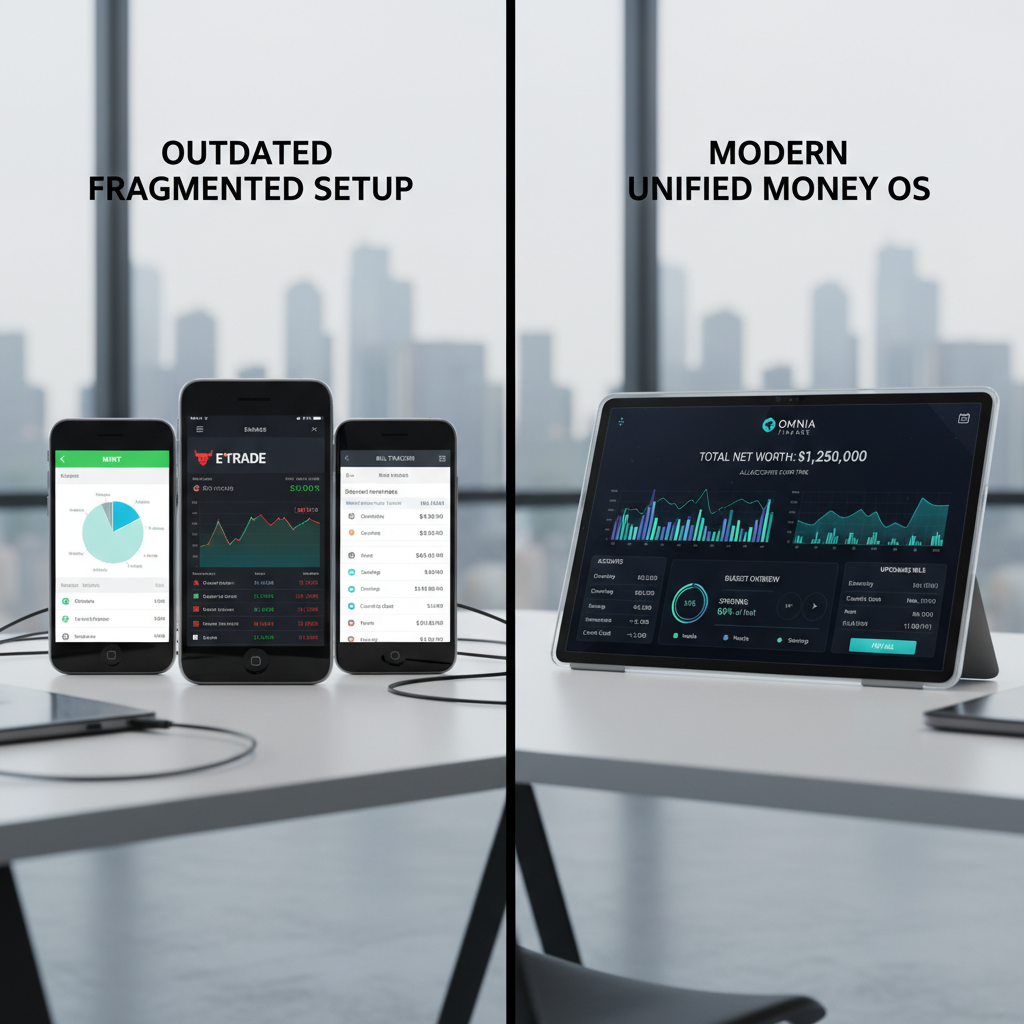
Remember when managing your money meant juggling three or four different apps? One for budgeting. Another for investment tracking. A third for net worth monitoring. A fourth for bill reminders. The fragmentation was exhausting—and it left your financial picture incomplete.
That era is officially over. The rise of “money operating systems”—unified platforms that combine budgeting, investment tracking, forecasting, and AI-powered guidance in a single interface—has fundamentally changed how people approach personal finance. These modern tools have rendered legacy solutions like Mint increasingly obsolete, forcing users to finally consolidate their financial lives into one coherent ecosystem.
If you’re still bouncing between separate apps or clinging to outdated tools, it’s time to understand what’s changed and why migration to an all-in-one solution isn’t just convenient—it’s essential for making smarter financial decisions.
The Death of Fragmentation: Why Separate Apps No Longer Cut It
For years, the personal finance app landscape operated on a principle of specialization. You’d use YNAB for zero-based budgeting discipline. Fidelity or Vanguard for investment management. Zillow for real estate tracking. Mint (before its 2024 shutdown) for expense categorization. Each app did one thing well, but none gave you the complete picture.
This fragmentation created a critical blind spot: you couldn’t see how your daily spending decisions affected your long-term investment goals. You couldn’t forecast whether your current budget would actually support your retirement timeline. You couldn’t understand your true net worth across all accounts in real time.
The market responded by creating a new category: all-in-one money platforms designed to eliminate these gaps. Unlike the specialized tools of the past, these modern solutions integrate spending, saving, investing, and long-term planning into unified dashboards with cross-account visibility.
The New Generation of ‘Money OS’ Platforms
Three platforms have emerged as the leading contenders in this space, each taking a slightly different approach to unification:
Origin: The Compliance-First Money Operating System
Origin positions itself as the most comprehensive all-in-one platform, combining expense tracking, investment analysis, retirement forecasting, and AI-powered financial guidance. Unlike traditional budgeting apps that operate in silos, Origin connects all major financial accounts and provides cross-account visibility across net worth, investments, liabilities, and cash flow.
The key differentiator is Origin’s AI Advisor—it’s built within the app environment and understands your actual financial data, not just generic prompts. This means the guidance you receive is grounded in your real situation: your specific income, assets, debts, and goals.
Price: Origin’s pricing structure reflects its premium positioning as a full-spectrum financial platform, though specific tier details vary by subscription level.
Best for: Users who want holistic financial planning rather than just budgeting. Ideal for couples seeking shared financial visibility and individuals who care about how daily spending decisions impact long-term wealth building.
Monarch Money: The Flexible Household Solution
Monarch Money has filled a critical gap by offering comprehensive wealth tracking with genuine collaborative features. At $99.99 annually (or $14.99 monthly), it’s positioned as the premium flexible option.
What sets Monarch apart is its approach to household finances. You get two logins under one subscription, shared dashboards for couples, and the ability to collaborate with unlimited people. The app supports traditional or flexible budgeting, investment tracking, subscription monitoring, and even integration with Coinbase for cryptocurrency, Zillow for real estate values, and vehicle valuation tools.
The forecasting capability is particularly valuable—you can project spending and savings for future months, helping you understand whether your current budget trajectory supports your goals.
Rating: 4.9/5 on Apple App Store, 4.7/5 on Google Play Store.
Best for: Couples and households seeking comprehensive wealth visibility without strict zero-based budgeting discipline. Users who value integrated investment and real estate tracking.
YNAB: The Discipline-Focused Alternative
While not a true “money OS,” YNAB (You Need A Budget) remains the gold standard for users prioritizing behavioral change and debt payoff. At $109 annually, it enforces zero-based budgeting—assigning every dollar a purpose before you spend it.
YNAB’s strength lies in its educational approach and intentionality framework. It has the steepest learning curve among popular options but delivers exceptional results for users serious about debt elimination and budget discipline.

Rating: 4.8/5 on Apple App Store, 4.6/5 on Google Play Store.
Best for: Users committed to serious debt payoff and strict budgeting discipline. Those willing to invest time in learning a system that fundamentally changes spending behavior.
Beyond Budgeting: What Modern All-in-One Platforms Actually Deliver
The shift from fragmented apps to unified platforms represents more than convenience—it’s a fundamental change in financial visibility and decision-making capability.
Cross-Account Visibility: Modern platforms eliminate data silos by connecting all your accounts—checking, savings, investment, credit cards, loans—into a single dashboard. You see your complete net worth in real time, updated automatically.
AI-Powered Guidance: Unlike generic financial advice, AI advisors in platforms like Origin analyze your actual spending patterns, income, assets, and goals to provide personalized recommendations. This guidance evolves as your financial situation changes.
Integrated Forecasting: You can model future scenarios—”What if I increase my 401(k) contribution by $200/month?” or “Can I afford to take 6 weeks off work?”—and see the impact across your entire financial picture.
Investment Integration: Rather than checking a separate brokerage app, your portfolio appears alongside your budget, showing how investment performance affects your net worth and long-term goals.
How to Evaluate and Migrate to a Modern Platform
Step 1: Audit Your Current Tools List every app you currently use for financial management. Note what each does and what you’d miss if you consolidated.
Step 2: Define Your Priority Are you primarily focused on budgeting discipline (YNAB), household collaboration (Monarch), or comprehensive wealth management (Origin)? Your answer determines which platform to prioritize.
Step 3: Test with Free Trials Most platforms offer free trials or freemium options. Monarch offers a one-week free trial. Use this period to import your accounts, test the interface, and verify that the app supports all your account types (crypto, international accounts, etc.).
Step 4: Plan Your Migration Export historical data from your current apps. Most modern platforms allow bulk uploads or can import from competitors. Set a migration date and commit to using only the new platform for 30 days before reverting to old tools.
The Economics of Consolidation
The financial case for migration is compelling. If you’re currently paying for three separate services ($10-15 each), consolidating to a single $99-109 annual platform actually reduces your total cost while expanding functionality.
More importantly, the unified view prevents costly mistakes. Users who can see how discretionary spending impacts investment goals make different—and better—financial decisions. The platform essentially pays for itself through improved decision-making.
What This Means for Your Financial Future
The era of fragmented financial apps is ending. The modern “money OS” represents a genuine leap forward in personal finance technology—not just incremental improvement, but a fundamentally different approach to financial visibility and decision-making.
Whether you choose Origin’s comprehensive approach, Monarch’s collaborative flexibility, or YNAB’s disciplinary framework, the key insight remains: unified platforms make you a better financial decision-maker by eliminating information silos and providing context that separate apps simply cannot.
The question is no longer whether to consolidate, but which platform best matches your financial personality and goals. The tools exist. The benefits are proven. The only remaining barrier is taking action.
Unlock Full Article
Watch a quick video to get instant access.