
Negotiating in the Age of AI: How Managers Can Master Data-Driven Deals Without Losing the Human Edge

The Negotiation Landscape Has Changed—And Your Old Playbook Won’t Cut It
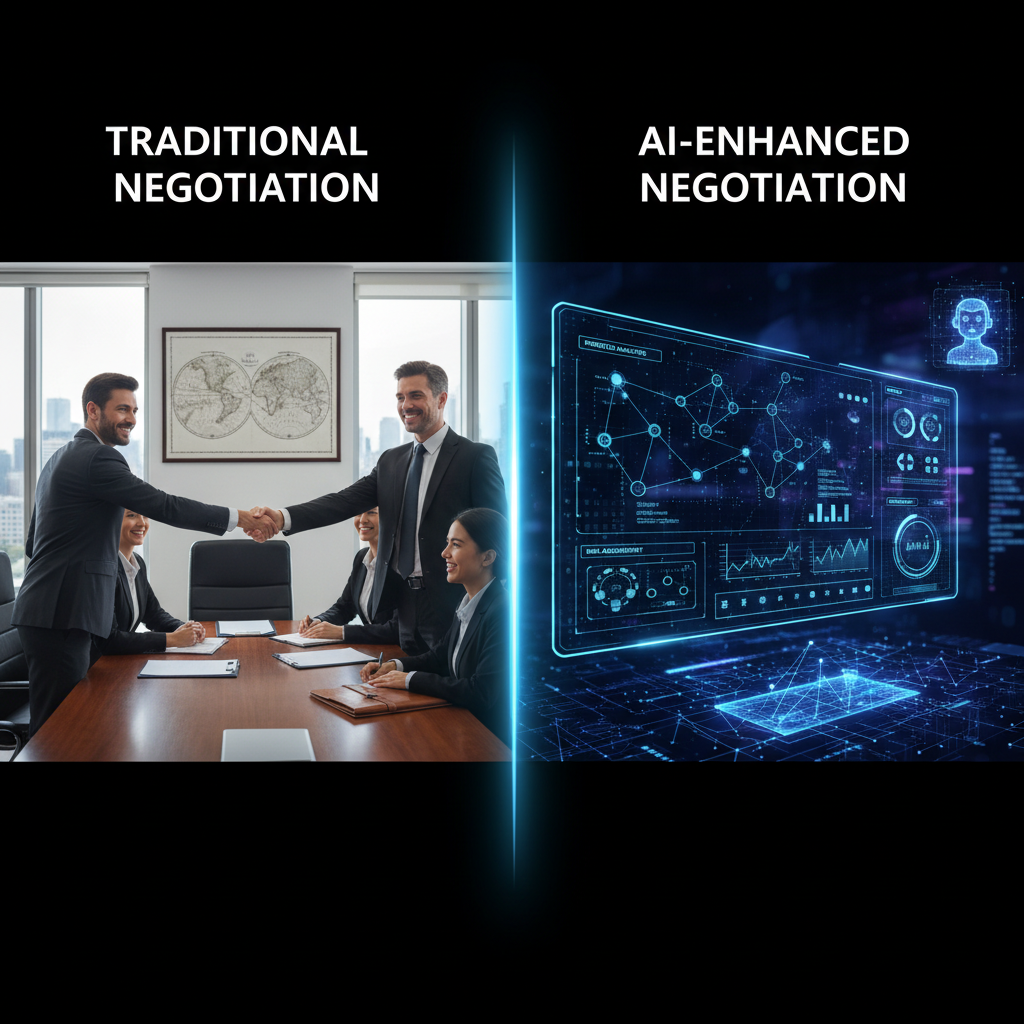
If you’re a manager in 2026, you’re negotiating with more than just people anymore. You’re negotiating with algorithms, dynamic pricing systems, procurement bots, and stakeholders armed with real-time data analytics. The traditional negotiation tactics your mentor taught you—anchoring, building rapport, reading body language—still matter. But they’re no longer enough.
The stakes are higher. Your vendor just deployed an AI system that adjusts pricing in real-time based on market conditions. Your procurement team is pushing back on budget requests using predictive analytics. Internal negotiations over AI implementation budgets require you to understand both the technical landscape and the human resistance to change. And if you’re unprepared, you’ll leave significant value on the table—or worse, damage relationships with data-driven counterparts who expect you to speak their language.
The good news? A new generation of online negotiation courses designed specifically for managers now combines classic negotiation theory with AI-powered simulations, analytics frameworks, and real-world scenarios that mirror today’s business environment.
Why Traditional Negotiation Training Falls Short in 2026
Most negotiation courses still focus on foundational concepts: BATNA (Best Alternative to a Negotiated Agreement), reservation prices, and value creation. These concepts remain essential. But they were designed for a world where negotiations happened in conference rooms with coffee and handshakes.
Today’s managers face a fundamentally different challenge: negotiating across multiple channels (email, chat, video), with counterparts who have instant access to competitive data, and within organizational contexts where every negotiation decision is scrutinized through the lens of cost optimization and risk management. Add AI into the mix—whether you’re negotiating with vendors who use dynamic pricing algorithms or managing internal stakeholders who want to implement AI solutions—and the complexity multiplies.
This is where modern, AI-integrated negotiation courses create real competitive advantage. They don’t replace traditional negotiation skills; they enhance them with the tools and frameworks managers actually need in 2026.
The Best Online Negotiation Courses for Managers: A Breakdown
MIT Sloan’s AI-Accelerated Negotiation Business Sprints
MIT Sloan Executive Education offers what many consider the gold standard for AI-integrated negotiation training. Their on-demand “Mastering Negotiation Skills with AI” program combines research-based negotiation strategies with AI-powered coaching and feedback, allowing you to practice with a sophisticated AI counterpart anytime, anywhere, in multiple languages.[2]
The program is structured in two Business Sprints, each completed over 30 days on your own schedule. The first covers fundamental negotiation concepts—value creation, value claiming, and subjective value building. The second dives into advanced tools, multi-party negotiations, and breaking through common barriers.[2]
What makes it stand out: Led by MIT Sloan Professor Jared Curhan, who is world-renowned for his research on negotiation psychology and the application of novel technologies in the classroom. The AI counterpart isn’t a simple chatbot; it’s a sophisticated system designed to simulate realistic negotiation dynamics and provide immediate feedback on your approach.[2]
Format & Time Commitment: Fully asynchronous, on-demand. 30 days per Business Sprint. Ideal for busy managers who can’t commit to rigid schedules.
Best for: Managers who want cutting-edge AI-powered practice with flexible scheduling and world-class expertise.
Indiana University Kelley’s Leading with AI: Negotiation
Kelley’s “Leading with AI: Negotiation” program takes a blended approach, combining asynchronous online learning with live in-person and online sessions. The course runs from September 3-24, with an in-person component in Indianapolis on September 10 and a live online session on September 17 (1-3:30 PM).[1]
The curriculum focuses on clarifying key interests, building strong negotiating positions, identifying value-creation opportunities, handling hard counters, and leveraging generative AI tools to simulate counterpart styles and pressure-test tactics.[1]
What makes it valuable: The course explicitly teaches you how to use AI as a negotiation partner—testing assumptions, refining offers, and rehearsing difficult scenarios within safe, ethical boundaries. You’ll complete an Action Learning Project tailored to your organization, ensuring immediate real-world application.[1]
Pricing & Discounts: Discounts available for IU alumni, staff, and groups of three or more participants. Part of a four-course professional development series leading to a Kelley Professional Certificate in AI Leadership.[1]
Best for: Managers seeking a structured program with in-person networking, live instructor feedback, and a recognized professional certificate.
Columbia Business School’s Negotiation Strategies (Online)
Columbia’s six-week online program, led by Michael Morris (Chavkin-Chang Professor of Leadership), blends academic expertise with hands-on application through live sessions, role plays, AI chatbot scenarios, and real-world case studies.[3]
The curriculum covers fundamental principles, conflict resolution strategies, and complex multiparty interactions. AI-based simulation scenarios allow you to build core and advanced skills through interactive exercises, while weekly office hours provide personalized feedback.[3]
What makes it compelling: The program explicitly addresses how to balance traditional communication methods with modern digital tools to ensure clear, effective negotiation across organizational levels. This is particularly valuable for managers navigating hybrid work environments and digital-first negotiations.[3]
Format: Six weeks, online. Includes live sessions, AI simulations, case studies, office hours, and peer learning with global participants.
Best for: Managers who want academic rigor combined with practical application and prefer a structured six-week timeline.
Harvard’s HHI Executive Course (Frontline Associates)
Harvard’s negotiation course, delivered through Frontline Associates, offers a 20-hour intensive combining live immersive sessions with real-world scenarios from conflict, climate, and migration negotiations.[4]
The course explores how AI can support negotiation strategy, adaptability, and decision-making based on Harvard’s cutting-edge research. Participants receive a comprehensive handbook on complex negotiation and free access to the AI Negotiation Challenge Learning Platform through May 2026.[4]
Cost: $2,200 USD for the 20-hour course (including platform access). The course recommends purchasing ChatGPT Plus ($20/month) to assist in crafting your AI assistant, though this isn’t included in the course fee.[4]
Best for: Managers seeking Harvard-backed expertise with practical, real-world negotiation scenarios and extended AI platform access.
The AI Coaching Advantage: What Research Shows
You might wonder: can an AI really help me negotiate better? The research says yes—but with important caveats.
MIT researchers conducted fascinating experiments where participants received live coaching from an AI program called MindMeld during chat-based negotiations with actual humans. The system offered real-time alternative suggestions that participants could accept, modify, or ignore.[5]
The results were encouraging: students who received “dominant-warm” prompts from the AI negotiation coach improved their performance. However, other types of prompts either had no impact or actually worsened performance.[5] This highlights a critical lesson: it’s not just about whether you have AI or not anymore—it’s about how you implement these systems.[5]
Multiple panelists at MIT’s 2025 AI Negotiation Summit confirmed that AI can serve as a highly effective “backstage negotiation coach,” offering personalized training and feedback without replacing human judgment.[6]
How to Choose the Right Course for Your Situation
Choose MIT Sloan if: You want the most advanced AI-powered practice, prefer complete flexibility, and are comfortable with self-directed learning. Best for managers who need to practice frequently and want access to a sophisticated AI counterpart.
Choose Kelley if: You value in-person networking, want a recognized professional certificate, and prefer a structured program with live feedback from instructors. Best for managers in organizations that value credentials.
Choose Columbia if: You want academic rigor combined with practical application, prefer a defined timeline, and value peer learning with global professionals. Best for managers in larger organizations with learning and development budgets.
Choose Harvard/Frontline if: You want Harvard’s brand and research backing, prefer intensive real-world scenarios, and want extended access to an AI practice platform. Best for managers negotiating high-stakes, complex deals.
The Bottom Line: Don’t Negotiate in 2026 Without These Skills
The managers who will win in 2026 aren’t those who cling to traditional negotiation tactics. They’re the ones who understand how to combine human judgment with AI insights, who can read both people and data, and who practice their approach before walking into high-stakes conversations.
Whether you choose MIT Sloan’s cutting-edge AI simulations, Kelley’s structured certificate program, Columbia’s academic rigor, or Harvard’s real-world scenarios, the investment in modern negotiation training will pay dividends. In a world where your vendors are using AI to optimize pricing, your procurement team is analyzing every deal through predictive analytics, and your internal stakeholders expect data-driven decision-making, you need more than intuition.
You need a framework, practice, feedback, and the confidence that comes from rehearsing difficult scenarios with an AI partner before facing them with real counterparts.
Start with the course that best matches your learning style, schedule, and organizational context. Then commit to practicing regularly—because like any skill, negotiation excellence comes from deliberate practice, not passive learning.
Unlock Full Article
Watch a quick video to get instant access.