Owning a high-end home used to mean you could “set and forget” your insurance. Those days are over.
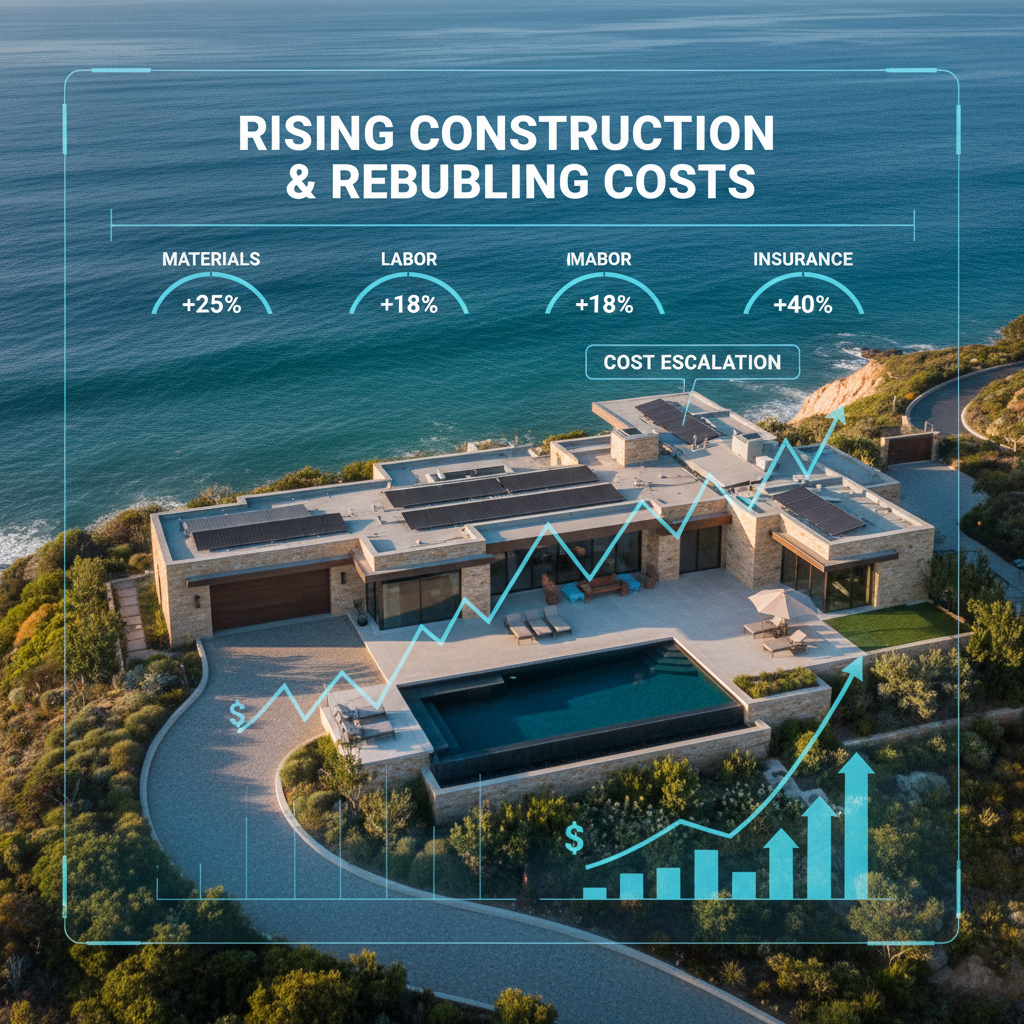
In the last few years, construction costs, luxury finishes, and catastrophe risks have surged, while many Coverage A limits and rebuild estimates have barely moved. The result: plenty of seven- and eight-figure homes are quietly underinsured by hundreds of thousands—or even over a million—dollars, right now.[1][2][3]
If your home would cost $4–$5 million to rebuild today but your policy is still sitting at $2.8–$3.2 million, you are effectively self-insuring the difference. In a total loss, that gap lands squarely on you.
The Silent Squeeze: Why High-Value Homes Are Suddenly So Underinsured
Three forces are driving the underinsurance crisis for high-value properties:
- Construction inflation: Post‑COVID supply chain issues, labor shortages, and higher material costs dramatically pushed up replacement costs, especially for custom and luxury builds.[2]
- Catastrophe pricing: Wildfire, hurricane, flood, and severe storm risks have forced insurers to reprice coverage and tighten capacity, particularly in California, Florida, Texas, Colorado, and coastal/high-wildfire ZIP codes.[1][2][3]
- Lagging policy updates: Carriers often increased premiums far faster than they updated Coverage A limits, and many homeowners have not done a recent professional rebuild-cost review.[4][8][9]
HUB’s 2026 High-Net-Worth Outlook reports that 77% of affluent homeowners say they’ve struggled to secure adequate property insurance, especially in catastrophe-prone markets.[2] At the same time, firms like B.F. Saul and Matic note carriers are demanding higher total insurable values and raising deductibles as reconstruction costs and climate risks rise.[1][3]
Translation: You might be paying more than ever, while still being dramatically underinsured.

Step 1: Stop Using Market Value—Estimate Your True Rebuild Cost
For a high-value home, the sale price is almost meaningless for insurance. What matters is what it would cost to rebuild your home, as it stands today, from the foundation up.
How to get a realistic replacement cost for a luxury property
Use a three-pronged approach:
- Specialist rebuild-cost tools: Private client brokers and high-net-worth carriers (e.g., Chubb, AIG Private Client Group, PURE Insurance, Cincinnati Private Client) use advanced valuation platforms that factor in custom architecture, imported materials, artisan labor, and complex systems. Many will send an appraiser or risk consultant to your home at no extra charge as part of a comprehensive risk review.[2][3]
- Local luxury builder input: Ask a reputable custom builder what they’re currently charging per square foot for homes similar to yours. In 2025–2026, it’s not unusual to see:
- $400–$600+/sq ft for upscale suburban custom homes
- $700–$1,200+/sq ft for coastal, mountain, or architect-designed luxury homes with high-end finishes
- Line-item upgrades list: Document premium elements that blow up rebuild cost: slate or clay tile roofs, custom millwork, steel or glass staircases, home theaters, wine cellars, smart-home systems, imported stone, and high-end appliances like Sub‑Zero Pro 48 refrigerators (~$18,000–$20,000) or La Cornue Château ranges ($40,000+).
If your 7,000 sq ft home would cost $800/sq ft to rebuild, your core rebuild cost is $5.6 million—before you even add debris removal, architect/engineering fees, code upgrades, and extended replacement buffers.
Step 2: Spot the Red Flags Hiding in Your Existing Policy
Once you have a realistic rebuild number, compare it against your current declarations page. Immediate red flags:
- Coverage A far below true rebuild cost: If your estimate comes to $5 million and your Coverage A is $3.5 million, you have a $1.5 million personal gap in a total loss scenario.[4][8][9]
- No extended or guaranteed replacement cost: Many mass-market policies cap payouts at the listed limit. High-value carriers often offer extended replacement cost (e.g., 25–50% above Coverage A) or true guaranteed replacement cost, which can respond even if costs spike. Realtor.com and other 2026 guides warn that opting for actual cash value or low limits can make post-claim rebuilding nearly impossible.[4]
- Outdated or missing ordinance or law coverage: If your city now requires higher foundations, fire sprinklers, seismic retrofits, or hurricane upgrades, those code changes can add hundreds of thousands to your rebuild. Carriers in high-risk areas are explicitly pushing for higher total insurable values because of these escalating rebuild demands.[1][3]
- High deductibles chosen for the wrong reason: As average deductibles have risen 20%+ in recent years, many HNW homeowners have accepted very high wind, hurricane, or wildfire deductibles to manage premiums.[1][2][3] That can work—but if your liquidity is tight, the wrong deductible can turn a manageable loss into a severe cash crunch.
HUB’s private client team notes that many affluent households are accepting carve-outs, higher deductibles, and narrower coverage just to secure any capacity in tough markets like California, New York, New Jersey, and Texas—and often without fully understanding the downside.[2]

Step 3: Fix the Gap—How to Rebuild Your Protection Before a Loss
1. Re-set Coverage A with an updated valuation
Ask your broker for a formal rebuild-cost revaluation through a high-net-worth or private client carrier. Many will send specialists to document square footage, finishes, outbuildings, and unique features at no cost.[2][3]
If the valuation shows your Coverage A is low by 20–40% (common in 2024–2026), push to reset the limit to the full estimated rebuild cost, plus additional cushions where available.
2. Add extended or guaranteed replacement cost
For high-value properties, extended or guaranteed replacement cost is the closest thing you can buy to “inflation-proofing” your home coverage:
- Extended replacement cost: Many private client carriers offer 25%–50% above Coverage A. On a $5 million Coverage A, that’s an extra $1.25–$2.5 million to absorb price surges and code-driven cost spikes.
- Guaranteed replacement cost: Some top-tier carriers may agree to rebuild whatever it costs, subject to conditions (proper valuation, risk improvements, etc.). Availability varies by state and risk profile and is more common for well-maintained primary residences.[2][3]
Given that reconstruction costs in certain regions have risen double digits over a few short years, this buffer is no longer a “nice-to-have”; it is core protection against being underinsured.[1][2][3]

3. Supercharge your ordinance or law coverage
Code upgrades can add 10–30% to rebuild cost in older or heavily regulated municipalities—especially where seismic, wildfire, or coastal wind standards have tightened.[1][3]
Ask your broker to:
- Increase ordinance or law coverage to at least 15–25% of Coverage A (many high-value homeowners opt for more).
- Confirm it applies to both partial and total losses.
- Review local requirements (fire sprinklers, impact windows, elevated foundations, defensible space) to ensure your limits reflect real-world costs.
4. Use risk improvements to negotiate better terms
Insurers in 2026 are rewarding demonstrated risk mitigation. HUB notes that clients who invest in roof upgrades, water detection systems, wildfire defensible space, and similar improvements are more likely to see better pricing and renewal terms.[2]
High-impact, high-credibility upgrades include:
- Water leak detection: Whole-home systems like Flo by Moen Smart Water Monitor & Shutoff (often $500–$800 plus installation) or Phyn Plus can automatically shut water off during a leak—critical in homes with multiple stories and luxury finishes.
- Roof and opening protection: Class 4 impact-resistant roofing, hurricane-rated windows (e.g., impact glass systems used in coastal Florida builds), and fire-resistant roofing in wildfire zones.
- Wildfire hardening: Defensible space landscaping, ember-resistant vents, non-combustible fencing near the home, and enclosed eaves—steps many carriers now actively encourage or require for preferred pricing in high-risk ZIPs.[1][2][3]
These upgrades don’t just protect your home; they give your broker leverage to negotiate better limits, more favorable deductibles, or access to private client carriers that are otherwise selective about the risks they take on.
Step 4: Build a Private Client Strategy—Not a Commodity Policy
For homes above ~$1.5–$2 million in rebuild cost (and certainly those in the $3–$10 million+ range), you should be working with a specialist private client broker, not a generalist personal lines agent.
What a high-net-worth specialist broker does differently
- Access to better carriers: They work with high-net-worth platforms and carriers that actively focus on complex properties and large asset portfolios, often with broader coverage, higher limits, and more flexible valuation options.[2][3]
- Holistic risk mapping: They’ll coordinate your home, collections, liability (including high-limit umbrella), flood, earthquake, and even cyber/reputation coverage—so your total risk picture is aligned.[2][3]
- Scheduled reviews: Top brokers recommend at least annual reviews, and additional check-ins after major events: renovations, new wings or outbuildings, pool or guest house additions, significant art/jewelry purchases, and relocations to higher-risk regions.[2][8][9]
Specialist firms warn that failing to update your broker before and after renovations or acquisitions is one of the biggest drivers of coverage gaps and claim disputes for affluent households.[2][3]

What You Should Do This Week (Before the Next Rate Hike or Wildfire Season)
The most expensive time to discover you’re underinsured is after the fire, hurricane, or burst pipe. You can dramatically reduce that risk in the next 7–10 days:
- Pull your current policy and write down Coverage A, extended/guaranteed replacement cost status, ordinance or law limit, and all deductibles.
- Rough out a rebuild estimate using up-to-date $/sq ft numbers from a local luxury builder and a quick conversation with a specialist broker.
- Schedule a private client review with a broker who works daily with high-value homes in your state’s regulatory and risk environment.
- Plan targeted upgrades—start with water shutoff, roof/defensible space, or security enhancements that carriers explicitly reward.
- Commit to annual valuation updates so your Coverage A and related limits keep pace with construction inflation and code changes.
Affluent families are increasingly caught between rising premiums and rising risks. Many respond by keeping limits flat and hoping for the best. The ones who come through major losses intact treat their coverage like a living plan—not a one-time purchase.
If your home has appreciated, been renovated, or sits in a high-risk region and you haven’t done a full valuation and policy review in the last 12–18 months, there is a real chance you’re underinsured by six or seven figures. Fixing that now is almost always cheaper than finding out the hard way.

Next step: before your next renewal, book a call with a specialist broker who focuses on high-value and private client homeowners. Ask them one direct question: “If my home burned to the ground tomorrow, are we absolutely certain my current limits and endorsements would rebuild it to the same standard?” If the answer is anything but an immediate, confident yes, it’s time to re-engineer your protection.
Unlock Full Article
Watch a quick video to get instant access.