High-Income And Still Overpaying? How To Snag Elite-Style Personal Loans In A 4% Fed Rate World

High earners are used to VIP treatment, but in the current 4% Fed rate world, many are quietly overpaying for personal loans that should look a lot closer to private-banking money than credit card debt. [2][6]
The good news: lenders are competing hard for prime, high-income borrowers, and if you know how to play the 2025 rate environment, you can unlock large, low-friction loans that feel much closer to institutional pricing than retail. [2][4]
Why A 4% Fed World Changes The Game
With the federal funds rate hovering near 4% after peaking much higher in the last tightening cycle, personal loan pricing has started to ease, but it has not fully “normalized” back to ultra-cheap money. [6]
Most mainstream personal loan APRs for top-tier borrowers still sit comfortably in the high single to low double digits, creating a wide spread over the Fed funds rate—and that spread is where educated high-income borrowers can negotiate, stack discounts, or shift to more sophisticated products. [2][4]
The Risk Premium You’re Really Paying
Personal loans are unsecured, so even for a surgeon earning $500,000 or a tech director with a 790 FICO score, lenders price in extra risk and operational costs versus a secured home equity loan or margin loan. [5]
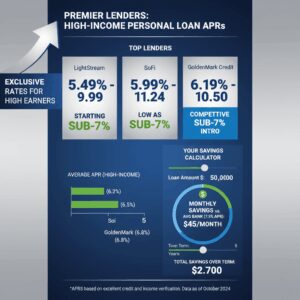
In 2025, this often means seeing personal loan offers in the 8%–14% APR range for excellent profiles, even though macro rates have moved down, which can create a false sense that “this is just what the market is” when in reality high-income borrowers often have better options if they push. [2][4]
Where High-Income Borrowers Quietly Get The Best Deals
Not all lenders treat a $250,000+ earner the same, and the best terms tend to live in three pockets: top-tier online lenders, relationship-focused big banks, and private-banking style programs that are barely advertised. [2][3]
If your income is strong and your credit is clean, your advantage is that multiple institutions will fight to win your business—you just have to force them to compete instead of accepting the first pre-approved offer in your inbox. [4]
Online Powerhouses Built For Large Loans
Flagship digital lenders such as LightStream, SoFi, and Best Egg have become go-to options for high-income borrowers because they support larger loan sizes, quick funding, and rate structures that reward excellent credit and strong income. [2][3][4]
For example, some leading platforms currently advertise maximum personal loan amounts up to around $100,000 for top borrowers, often with no origination fees and rate discounts for autopay—features that can materially lower your cost of capital when borrowing at scale. [2][3]
Big Banks And The Loyalty Discount
Traditional banks like Wells Fargo, Citi, and other national players frequently offer personal loans or unsecured lines that are meaningfully better if you already hold checking, savings, or investment relationships with them. [2][5][6]
Relationship pricing can take the form of autopay discounts, balance-based rate reductions, or private client tiers that quietly shave 0.25–0.75 percentage points (or more) off your APR, which compounds into thousands of dollars saved on a large, multi-year loan. [5][6]
Private Banking And Securities-Based Credit
Once your investable assets cross certain thresholds—often around mid-six figures or higher—banks and brokerages begin to offer securities-based lines of credit or tailored unsecured offers that can undercut standard personal loan rates. [5]
These products may allow you to borrow against a portfolio at rates that more closely track institutional funding costs rather than retail personal loan pricing, but they add market risk if your collateral falls in value, so they work best for borrowers with stable, diversified holdings and a conservative drawdown plan. [5]
Fixed Or Variable: Which Makes Sense Now?
In a 4% Fed rate backdrop with easing bias, the classic tension is whether to lock in a fixed rate and buy certainty, or ride a variable structure that could drift lower—or spike if inflation flares back up. [6]
High-income borrowers have more buffer for volatility, but they also tend to be more sensitive to opportunity cost, so the right choice often comes down to horizon and how aggressively you plan to prepay. [4][6]
When Fixed-Rate Personal Loans Shine
If your loan is funding a one-time, non-income-producing goal—like a medical procedure, wedding, or debt consolidation—fixed-rate personal loans from lenders such as LightStream, SoFi, Discover, or Citi can be appealing because your payment never changes. [2][4][6]
Given current spreads, locking a competitive fixed rate and then overpaying the principal with bonus cycles or vesting equity can let you treat the higher sticker APR as a worst-case scenario rather than your actual realized cost. [4]
Where Variable Structures Can Win
Variable-rate personal lines, HELOCs, or securities-backed lines tied to benchmark rates may make sense if your plan is to borrow briefly, aggressively pay down, or refinance within 12–24 months as rates drift lower. [5][6]
For high-income households with strong savings rates, the ability to float down with the market while keeping the option to exit quickly can outweigh the risk of short-term bumps, especially when the starting spread over the Fed rate is already modest. [5]
How To Time And Structure Your Application
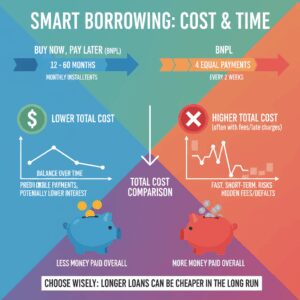
In 2025, the cost of waiting or rushing your application can easily swing your lifetime interest cost by four or five figures, especially on loans in the $50,000–$100,000 range. [2][4]
Instead of applying randomly, treat your loan like a mini-financing transaction: coordinate timing with macro moves, lender promotions, and your own balance sheet milestones. [3][6]
Step-By-Step Playbook For High-Income Borrowers
First, clean up your credit profile 60–90 days before you apply by paying down revolving balances to under 10–20% utilization, disputing any errors, and avoiding new credit inquiries that do not directly support your goal. [4]
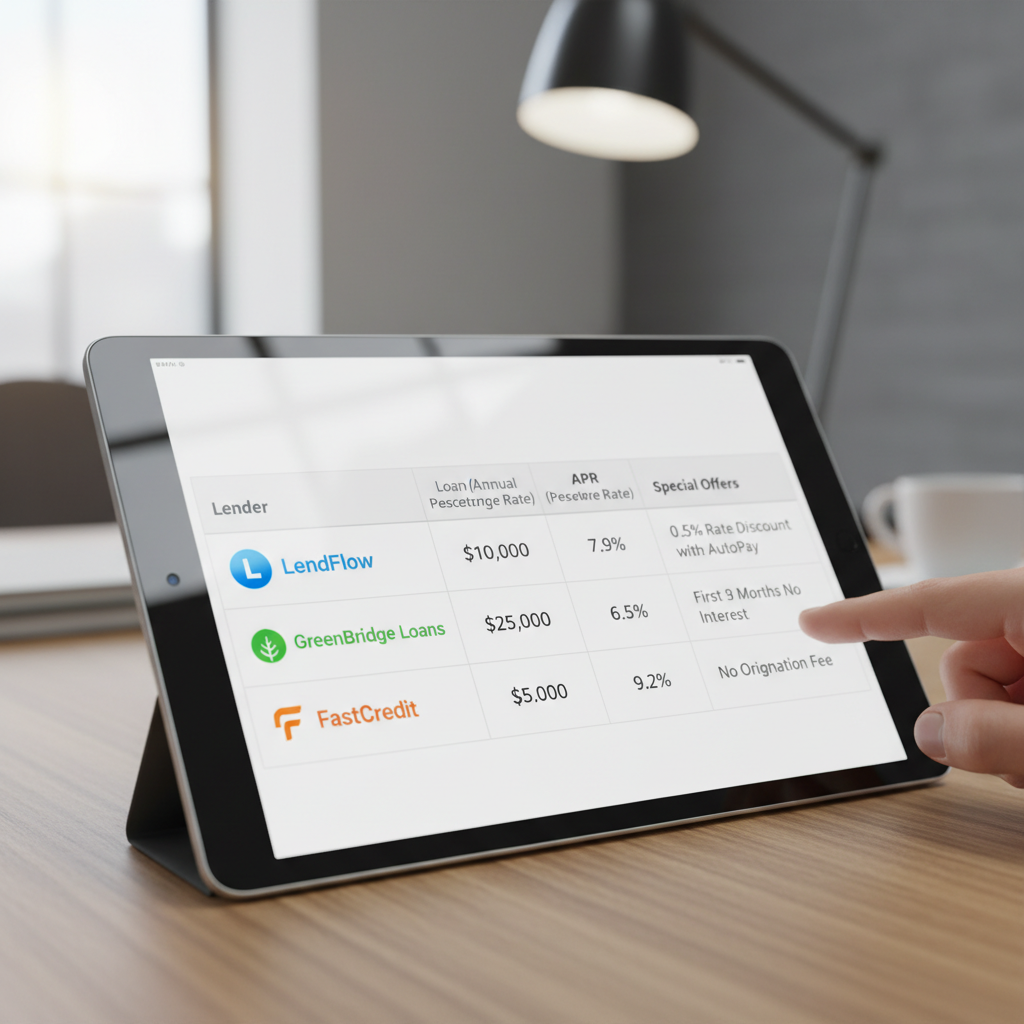
Next, pre-qualify with multiple online lenders that allow soft checks, plug their offers into a simple comparison spreadsheet, and then ask your primary bank or private-banking contact to beat or match the best quote you’ve received. [3][5]
Finally, layer in relationship and autopay discounts, choose the shortest term you can comfortably afford, and schedule automatic overpayments so your high income translates into a sharply lower effective interest rate than the APR on the contract. [4][6]
Reading Between The Lines On Fees
Many lenders advertise attractive headline APRs but recover economics through origination fees or other charges, which can quietly add hundreds or thousands in cost on a large loan. [2][3]
High-income borrowers should focus on the total cost of capital, not just the rate: no-fee lenders like some premium online platforms or big banks’ relationship offers can be significantly cheaper over time even if the nominal APR is slightly higher than a competitor that layers on fees. [2][4][6]
Lenders High-Income Borrowers Should Have On Their Radar
While the best choice depends on your credit profile and banking relationships, there are several brands that consistently appear in independent rankings for strong-credit or high-income borrowers seeking larger loans. [2][3][4]
Below is an example snapshot of how some commonly cited options tend to position themselves for prime borrowers in late 2025. [2][3][6]
| Lender | Typical Max Loan | Standout For |
|---|---|---|
| LightStream | Up to around $100,000 [2][3] | No-fee, large loans for excellent credit [2][4] |
| SoFi | Up to around $100,000 [3][4] | Fast funding, member perks, autopay discounts [3][4] |
| Wells Fargo | Up to around $100,000 [2][5] | Relationship rate discounts for existing customers [5] |
| Citi | Lower max than some peers [6] | Low fees and strong customer satisfaction [6] |
| Best Egg | Up to around $50,000 [4] | Rewards high income and good credit with lower rates [4] |
Psychological Edge: Use Your Profile Like A Pro Negotiator
The biggest mistake high earners make is acting like rate takers instead of price setters; lenders know that many busy professionals will accept the first “pre-approved” offer rather than carving out an hour to shop. [4]
By framing yourself as a long-term, profitable relationship—high deposit balances, strong investments, consistent direct deposit—rather than a one-off loan, you tap into the bank’s fear of losing a valuable client and tilt negotiations in your favor. [5][6]
Triggering FOMO And Scarcity On The Bank’s Side
When you tell a banker or private-banking contact that you already have strong written offers from competing institutions and plan to consolidate future assets where you receive the best financing treatment, you create subtle FOMO and urgency on their side. [5]
High-income borrowers who explicitly mention upcoming liquidity events, expected bonuses, or planned asset transfers often find that previously “standard” terms suddenly gain special discounts or fee waivers—because no lender wants to be the one that loses a profitable client over 0.50 percentage points. [5][6]
Act Now: Turn 2025 Rates Into Your Advantage
The current 4% Fed rate world is a window where personal loan pricing is high enough that lenders are hungry for safe, high-income customers, but stable enough that you can plan multi-year strategies without constantly reacting to policy shocks. [6]
If you earn a strong income, the real risk is not being rejected—it is quietly overpaying by five figures over the life of a large loan because you never forced lenders to compete, never leveraged your relationships, and never treated your debt like a capital allocation decision instead of a formality. [2][4]
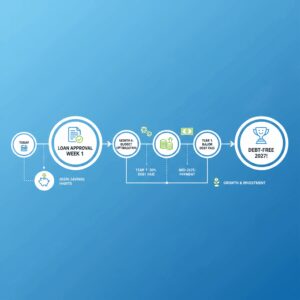
Decide on your borrowing need, pre-qualify with at least three online lenders, invite your main bank or private-banking team to beat the best offer, and then lock in a structure—fixed or variable—that matches your horizon and your aggressive prepayment plan. [3][5][6]

High-income borrowers rarely get cheaper money by waiting passively; you get it by being the kind of client every lender is afraid to lose. [4]
Unlock Full Article
Watch a quick video to get instant access.