You Just Walked Out of the Shelter with Your New Best Friend—Now What?
The adrenaline is pumping. Your new dog is in the car beside you. You’re imagining cozy evenings together, long walks, and unconditional love. But here’s the reality that catches most first-time adopters off guard: the next 72 hours will determine whether your adoption succeeds or becomes a stressful nightmare.
Same-day adoption is thrilling, but it’s also chaotic for your new dog. They’ve just been uprooted from a shelter environment, transported to an unfamiliar place, and surrounded by strangers in a new home. Without a solid plan for those critical first three days, you risk behavioral problems, anxiety, and a dog that won’t eat or bond with you. This guide walks you through exactly what to do—hour by hour—to set yourself and your adopted dog up for success.
Before You Even Pick Up Your Dog: The Pre-Adoption Checklist
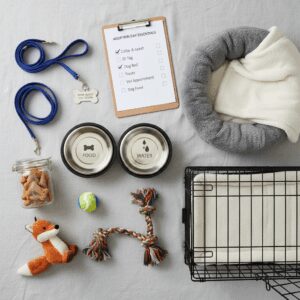
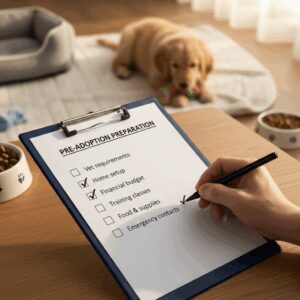
Don’t wait until adoption day to scramble for supplies. You need these items ready before your dog arrives home:
Essential Supplies (Budget: $150-$300)
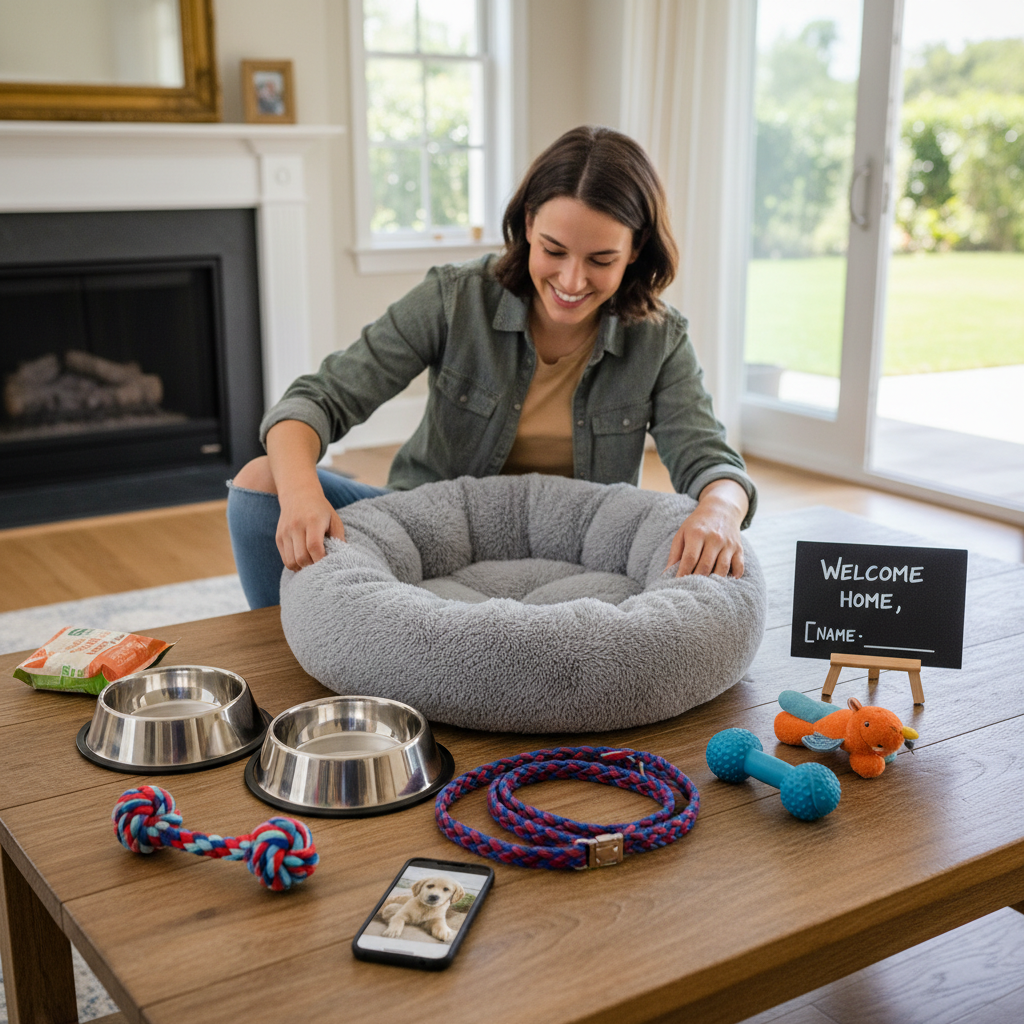
Sleeping Setup: A comfortable dog bed (Orvis Memory Foam Dog Bed, $80-$150) or a crate with blankets. Dogs feel safer in confined spaces during the adjustment period. If you opt for a crate, get one that’s appropriately sized—your dog should be able to stand, turn around, and lie down comfortably.
Food and Water Bowls: Stainless steel or ceramic bowls (Unleashed Life Stainless Steel Set, $25-$40) are best because they’re durable and easy to clean. Avoid plastic, which can harbor bacteria.
Food: Ask the shelter what brand and type your dog has been eating. Buy the same food to minimize digestive upset during the transition. Plan to gradually switch to your preferred brand over 7-10 days by mixing the old food with the new.
Collar, Leash, and ID Tag: A standard collar with an ID tag ($20-$50) is non-negotiable. A 6-foot leash ($15-$30) gives you control without restricting movement. Consider a front-clip harness (Easy Walk Harness by PetSafe, $25-$35) for better control during walks and less strain on the neck.
Enrichment Toys: Kong Extreme Chew Toys ($15-$25) and puzzle feeders ($20-$40) keep your dog mentally stimulated and reduce anxiety. Avoid toys with small parts that could be choking hazards.
Cleanup Supplies: Enzymatic cleaner like Nature’s Miracle ($8-$15) for any accidents. Paper towels, pee pads, and waste bags.
Professional Setup
Schedule a veterinary appointment within the first week. Your vet will check for underlying health issues, verify vaccination records, and discuss parasite prevention. Many shelters offer discounted first vet visits through partner clinics.
Research local dog trainers now. A one-on-one consultation ($75-$150) in your first week can prevent behavioral problems before they start. Look for trainers certified by the Certification Council for Professional Dog Trainers (CCPDT).
Hour 0-2: The Drive Home and First Arrival
On the Way Home
Keep your dog on a leash in the car—no exceptions. A loose dog is a distraction and a safety hazard. Resist the urge to stop at pet stores, friends’ houses, or parks. Your dog needs to get home immediately to begin decompressing.
Keep the car calm and quiet. Soft music or silence is better than excited chatter. Your dog is already overwhelmed; your energy should communicate safety and control.
The First 30 Minutes at Home
Take your dog directly to the backyard or designated potty area on leash. Let them relieve themselves and praise heavily when they do. This establishes the outdoor bathroom routine immediately.
Now comes the critical step: remain completely calm. This is not the time for excitement, hugging, or introducing family members. Your dog is in sensory overload. Calmness signals safety.
Let your dog explore the house on leash for 15-20 minutes. Spend a few minutes in each room. You go first through doorways—this establishes you as the leader. Let your dog sniff and investigate without interference.
Hours 2-24: The First Day Decompression Protocol
The Decompression Zone
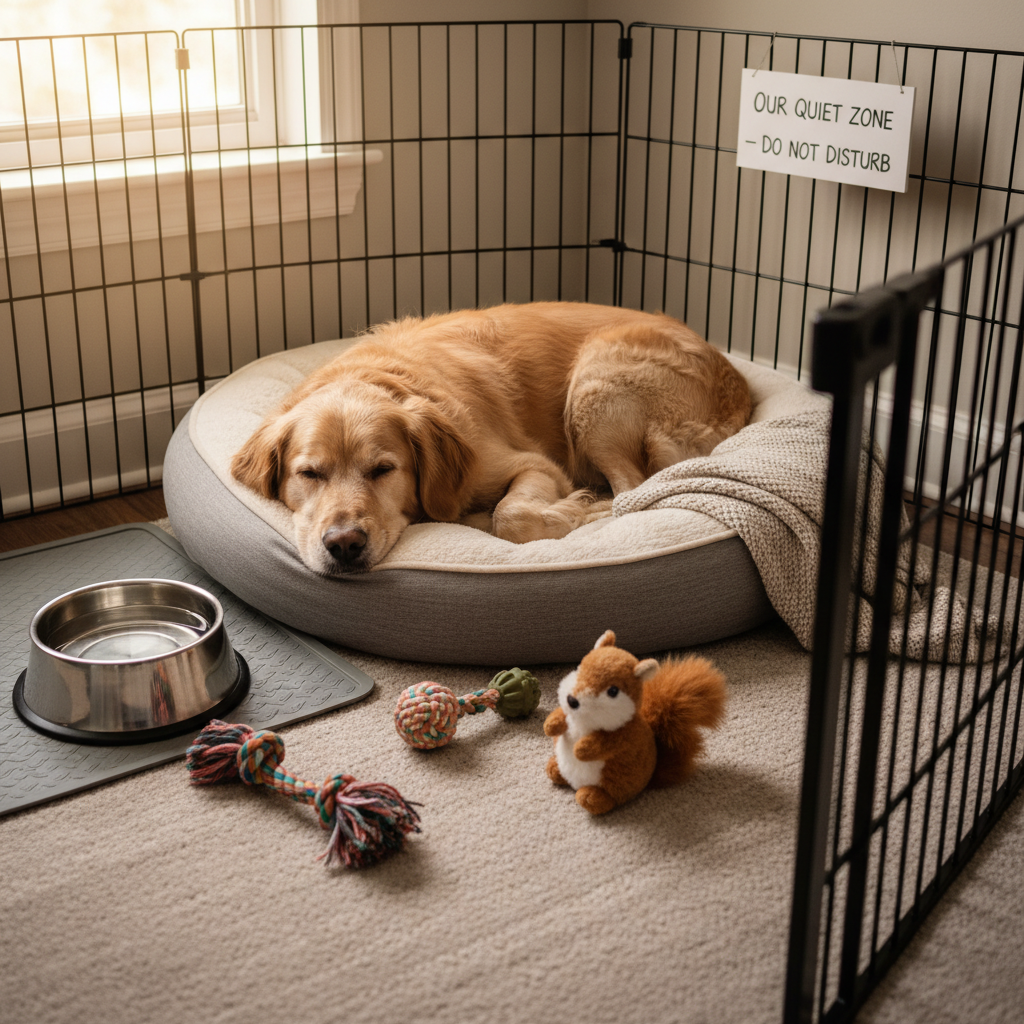
Create a designated safe space—typically a bedroom or den with their bed, water bowl, and some toys. This is their sanctuary during the adjustment period. Expect your dog to hide here for hours, and that’s completely normal. Do not force interaction or try to coax them out.
Many newly adopted dogs won’t eat or drink much on day one. This is stress-related and not an emergency. Offer food and water at regular intervals, but don’t panic if they’re refused. Keep the environment quiet and low-stimulus.
Establishing the First Routine
Dogs crave predictability. Establish this schedule immediately and repeat it consistently:
6:00 AM: Wake up, take dog outside on leash for 30-45 minutes. Let them eliminate and get exercise. Return inside.
6:45 AM: Feed breakfast (follow shelter recommendations for portion size). Leave food down for 15 minutes, then remove uneaten portions.
7:00 AM: Your personal routine begins. Don’t let your dog interrupt or demand attention. This establishes boundaries.
Midday: Midday walk (30 minutes), water break, brief play session with Kong toy.
Evening: Dinner, outdoor walk, quiet time before bed.
Bedtime: Final outdoor break, then crate or bed setup for sleep.
What NOT to Do on Day One
Don’t introduce your dog to other pets, children, or extended family. Don’t take them to the dog park or on neighborhood walks beyond the backyard. Don’t attempt training beyond basic potty breaks. Don’t allow free roaming of the house. Your dog needs time to decompress, not stimulation.
Days 2-3: The 72-Hour Window
Day Two: Observation and Adjustment
By day two, your dog may start showing their true personality. Some become playful; others remain withdrawn. Both are normal. Continue the established routine without deviation.
Watch for red flags: excessive panting, trembling, refusal to eat for more than 24 hours, or aggressive responses to normal activities. These warrant immediate veterinary attention.
If your dog hasn’t eaten by evening on day two, offer a bland diet: boiled chicken and white rice. If they still refuse food by day three, contact your vet.
Day Three: Gentle Introduction to Your World
If your dog has settled somewhat, you can begin introducing one family member at a time—calmly and without fanfare. Let them approach the dog, not the other way around. Keep interactions brief (5-10 minutes).
If you have other pets, this is still too early for direct introduction. Keep them separated.
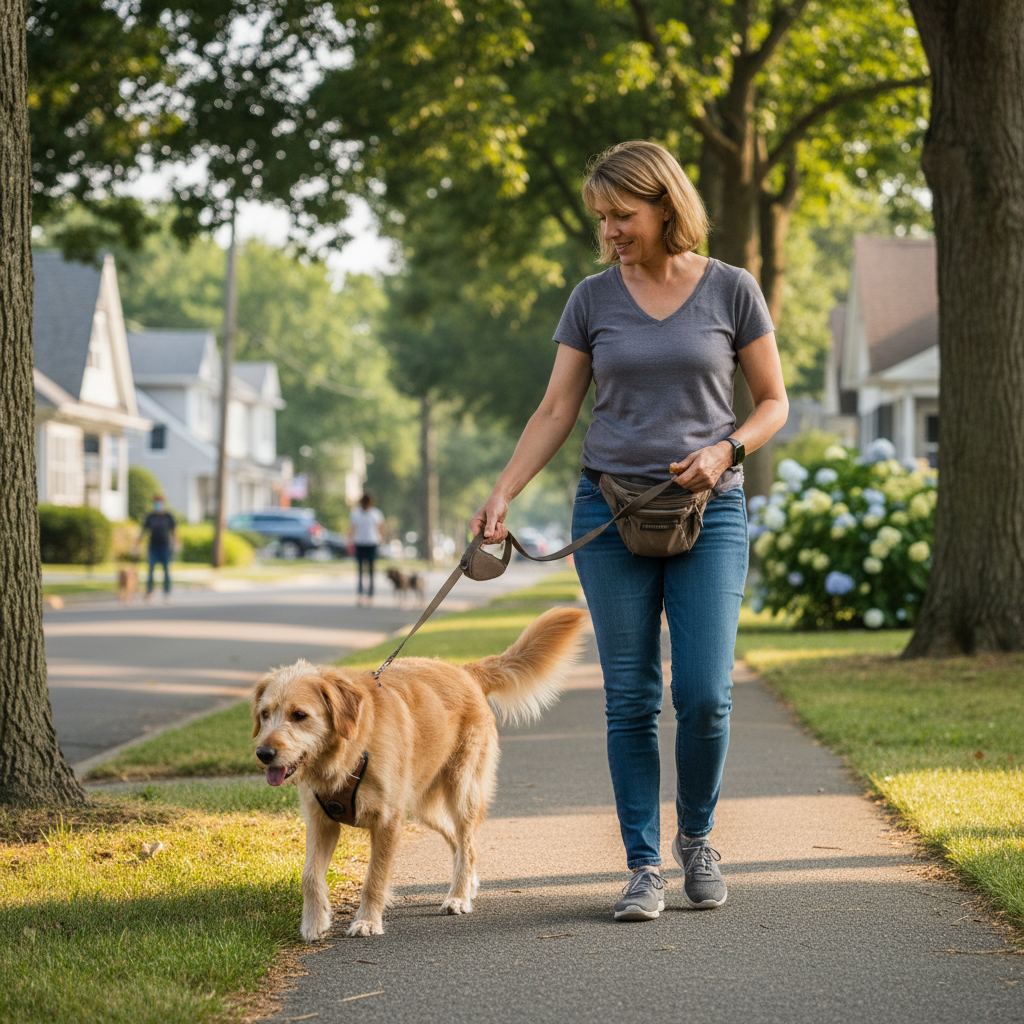
Take your dog on a neighborhood walk on leash—nothing crazy, just a 20-minute stroll around the block. This begins their environmental orientation.
Critical Vet and Training Steps Within Week One
Schedule that veterinary appointment immediately. Bring any medical records from the shelter. Discuss:
– Vaccination status and any needed boosters
– Parasite prevention (fleas, ticks, heartworms)
– Spay/neuter status
– Microchip registration
– Behavioral concerns
Contact a certified trainer for a consultation. Many offer phone consultations ($50-$75) before an in-person session. Discuss any behavioral red flags and get personalized guidance.
The Bottom Line: Your 72-Hour Investment Pays Dividends
Those first three days aren’t just about survival—they’re about setting the foundation for years of companionship. By keeping things calm, establishing routine, and resisting the urge to overwhelm your new dog with attention, you’re communicating safety and predictability. Your dog learns that you’re a reliable leader, not a source of chaos.
First-time adopters who follow this protocol report faster bonding, fewer behavioral issues, and dogs that settle into their new homes within 2-3 weeks instead of months. The effort you invest in those 72 hours compounds exponentially.
Welcome to dog ownership. You’ve got this.
Unlock Full Article
Watch a quick video to get instant access.