Your $8,000 Setup Is One Power Surge Away: The 2026 Playbook For Protecting High-End Electronics As A Renter
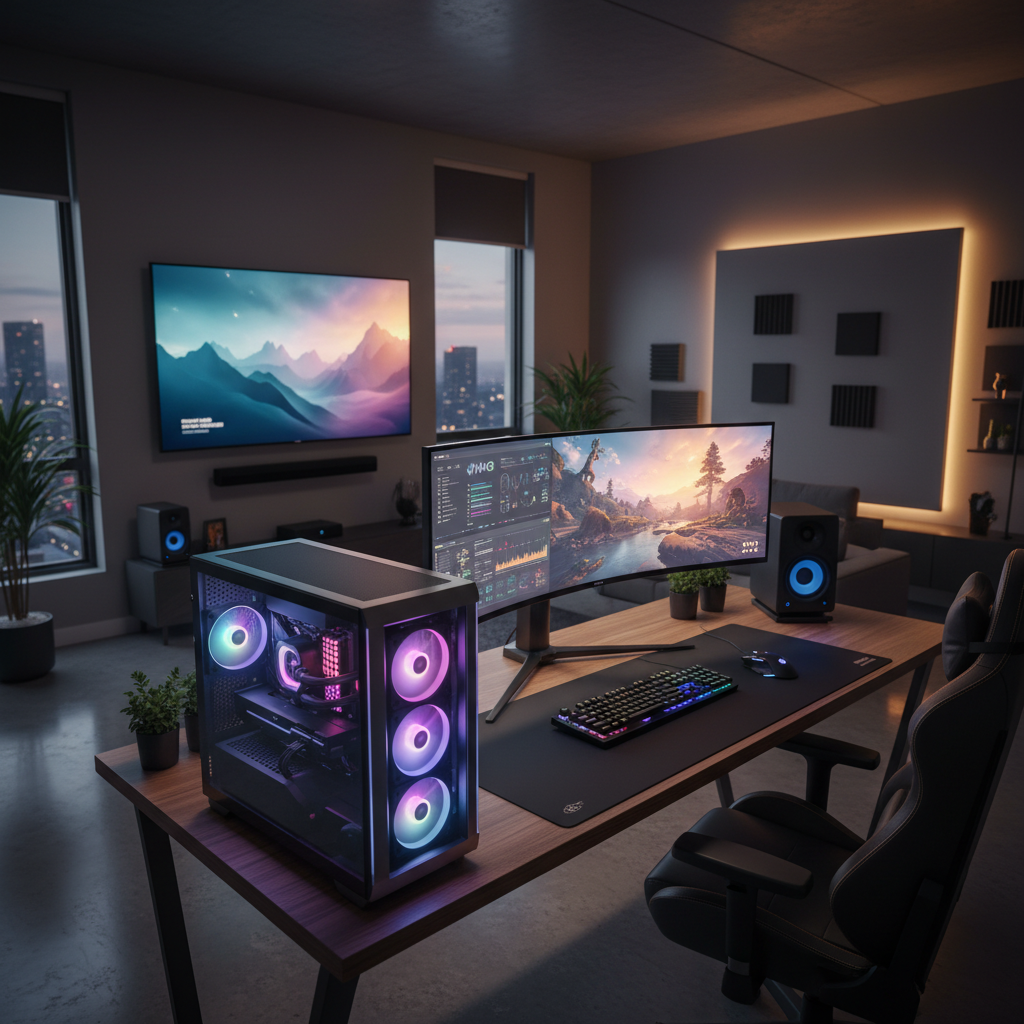
You spent years building your dream setup — a $3,000 gaming PC, a $2,200 OLED TV, a couple of $1,500 MacBooks, maybe a $2,000 Sony Alpha camera. One bad leak, theft, or power surge and that’s $8,000–$15,000 gone in a single night — unless you’ve quietly optimized your renters coverage around your electronics.
Most renters don’t realize that many standard policies quietly cap electronics payouts and default to depreciated value. That’s why electronics-heavy renters in 2026 are starting to treat coverage like they treat GPUs and camera glass: you don’t just grab the cheapest — you optimize for performance.


The 2026 Reality: Why Generic Renters Policies Quietly Fail Power Users
On paper, a typical renters policy looks generous: $30,000 of personal property coverage for around $15–$20 per month. But dig into the fine print and you’ll see quiet sublimits for theft of categories like jewelry and electronics — often around $1,000–$1,500 per category per claim.[1]
Translation: if you have a $2,500 custom PC, $1,800 laptop, $1,200 camera, and a $1,000 sound system stolen together, a policy with a $1,500 electronics theft cap may only pay a fraction of your loss — even if your overall personal property limit is $30,000.[1]
On top of that, many base policies default to actual cash value (ACV), which subtracts depreciation. A 3-year-old $2,000 laptop might be valued at $700–$900 in a claim, not the $2,000 you’d need to replace it with a comparable current model.[1]
Key coverage levers that matter for expensive electronics
Before you even compare insurers, you need a checklist focused on electronics performance, not just price:
- Personal property limit that matches your total setup — for electronics-heavy renters, this is often $50,000–$75,000.[2]
- Replacement cost coverage (not ACV) on personal property, ideally included by default or as a low-cost upgrade.[1][3]
- High or customizable sublimits for electronics — or the ability to schedule/”blanket” electronics specifically.[1]
- Optional endorsements for power surges, high-value gear, or business-used electronics.
- Low-friction claims experience for tech-heavy losses (uploading receipts, photos, serial numbers, etc.).[1]
How 2026’s Top Carriers Stack Up For Electronics-Heavy Renters
Industry rankings for 2026 consistently highlight a core group of renters insurers: Amica, State Farm, USAA, Travelers, Erie, Lemonade, Allstate, and Progressive.[1][2][4] The difference for electronics-focused renters is how each handles replacement cost, sublimits, and customization.
1. Amica: Premium-Level Protection For Multi-Device Households
Amica regularly sits near the top of 2026 renters insurance rankings for overall quality, and it’s especially attractive if you have multiple expensive devices under one roof.[1]
- Coverage profile: Strong baseline coverage with the option to add extra coverage for electronics and other valuables.[1]
- Replacement cost: You can upgrade from ACV to full replacement cost coverage on personal property, which is critical if your laptops, monitors, and cameras are more than 2–3 years old.[1]
- Pricing: NerdWallet’s 2026 data shows average renters premiums around the mid-$100s annually among top carriers (e.g., Travelers at $155, USAA at $146), and Amica is typically competitive in that band.[1]
- Best for: Households with stacked electronics (several gaming consoles, multiple laptops, tablets, home theater gear) who want strong service and are willing to pay slightly more for peace of mind.
Why tech-heavy renters like it: Being able to layer extra coverage on top of a solid base policy means you can push your effective electronics protection closer to what your actual setup is worth, instead of being throttled by a low default sublimit.[1]
2. Erie: Replacement Cost Included By Default
Erie is a quiet favorite among renters who care about the math. One standout feature: its standard renters policy includes replacement cost coverage for personal property — something many competitors only offer as a paid add-on.[1]
- Coverage profile: Standard policy treats your belongings on a replacement cost basis, meaning a 4-year-old $1,800 laptop is paid at what it costs to buy a similar new model now, not its depreciated value.[1]
- Endorsements: Optional add-ons like identity theft and specific coverage upgrades give you flexibility if your electronics overlap with side business activities.[1]
- Best for: Renters who hate add-on complexity and simply want replacement cost built in from day one.
Electronics impact: If your tech ages fast (gaming GPUs, editing rigs, pro monitors), default replacement cost can easily be the difference between a $5,000 payout and a $2,500 ACV check after a big loss.
3. USAA: Elite Option If You Qualify
For active-duty military, veterans, and eligible families, USAA is consistently rated as one of the strongest renters insurers overall.[1][4]
- Coverage profile: More generous-than-average coverage, sometimes including protections that other carriers charge extra for, such as certain natural perils.[1]
- Pricing: NerdWallet lists USAA’s average annual renters premium at around $146.[1]
- Best for: Military-community renters with expensive electronics who want high overall coverage quality and fewer surprises buried in the fine print.
Electronics angle: USAA’s overall coverage generosity and reputation for claims handling make it a standout if your gear is mission-critical (remote workstations, field cameras, or advanced personal devices).

4. State Farm, Allstate & Progressive: Flexible Bundlers With Customizable Limits
For many renters, the most practical strategy is bundling auto and renters to drive down total cost. State Farm, Allstate, and Progressive are frequently highlighted in 2026 roundups for affordability, bundling value, and customization.[2][4]

- State Farm: Widely available, often competitively priced (Insuranceopedia lists average around $160/year), and a strong bundling play if you already insure your car there.[2]
- Allstate & Progressive: Rated as strong, customizable choices where you can fine-tune personal property limits and add endorsements for specific valuables.[4]
- Lemonade: Noted for fast online quotes and a slick app experience, averaging around $168/year in 2026 comparison tables.[2][4]
Electronics strategy with these carriers: Use the online quoting tools to:
- Push your personal property limit toward $50,000 or higher if your total inventory warrants it.[2]
- Add replacement cost coverage where it’s not standard.
- Request endorsements or specific scheduling for high-ticket items like a $3,500 Canon EOS R5 or a $4,000 editing laptop.
5. Regional Players: Security First & Others With Built-In Replacement Cost
Depending on your state, regional insurers can be a surprisingly strong play. For example, Security First’s HO4 renters program explicitly notes that it includes replacement cost coverage for personal property as standard, with Coverage C limits between $15,000 and $100,000.[3]
- Coverage profile: Furniture, clothing, electronics, and appliances are all treated on a replacement cost basis with no depreciation.[3]
- Best for: Renters in covered states (like Florida) who want high limits and replacement-cost electronics coverage without needing to add a separate endorsement.
How To “Spec Out” Your Electronics Coverage Like A Gaming Rig
Instead of asking “Which company is best?”, you get better results by speccing your coverage like a tech build — then choosing the carrier that lets you hit those specs at a sane price.
Step 1: Inventory Your Gear And Set A Realistic Limit
Insurance platforms commonly recommend building a quick home inventory to calculate replacement cost.[2]
- List every device: laptops, desktops, monitors, TVs, tablets, phones, consoles, networking gear, cameras, lenses, mics, lights.
- Use current street prices (not what you originally paid) to estimate replacement cost.
- Add other belongings (furniture, clothes, kitchen gear) — most people land in the $30,000–$75,000 range.[2]
For electronics-heavy renters, it’s common to land in the $50,000 personal property tier or higher, which comparison sites flag as appropriate for “renters with high-value items.”[2]
Step 2: Demand Replacement Cost Coverage
Whether it’s included by default (Erie, some regional carriers) or added as an upgrade (Amica, many others), replacement cost is non-negotiable if you care about your gear.[1][3]
- If a quote only shows ACV, look for an option to switch to replacement cost for a modest premium bump — often just a few dollars a month.
- Verify that the replacement cost applies to electronics specifically, not just general contents.
Step 3: Probe Electronics Sublimits And Endorsements
Don’t assume “$30,000 personal property” means $30,000 of electronics coverage for theft. Many policies cap theft payouts for certain categories like jewelry or electronics at around $1,000–$1,500 unless you add special coverage.[1][4]
- Ask: “What is the theft sublimit for electronics in this policy?”
- If it’s low, request either:
- A higher blanket electronics limit, or
- Scheduled coverage for specific devices like a $2,500 gaming laptop or $3,000 camera body.
DoorLoop’s 2026 landlord-focused guide explicitly reminds renters to understand category limits (like electronics) and add endorsements when needed.[4]
Step 4: Optimize Deductible And Discounts
Once your coverage specs are dialed in, then you optimize price. 2026 comparison data shows that stepping up coverage (e.g., $50,000 personal property with $500,000 liability) still typically lands in the low-to-mid hundreds per year for many carriers.[2]
- Choose the highest deductible you could comfortably pay out of pocket in a worst-case scenario (often $500–$1,000).
- Stack discounts: autopay, paperless billing, bundling with auto, installing smart-home security devices, staying claim-free.[1][2]

Act Now: Don’t Wait For The “I Thought It Was Covered” Moment
The renters most financially exposed in 2026 are often the ones with the most tech: remote workers with dual-monitor setups, creators with $6,000 camera rigs, and gamers with multi-thousand-dollar towers and peripherals.
If you’ve never checked your policy’s electronics limits, there is a real risk you’re currently underinsured — even if you “have renters insurance.” Sublimits, ACV, and vague endorsements can quietly cut a $10,000 loss down to a $2,000 payout.

Your 20-Minute Action Plan
- 1. Do a 10-minute gear tally: Roughly total the replacement cost of your electronics — you’ll likely surprise yourself.
- 2. Pull your current declarations page: Check personal property limit, verify if it’s ACV or replacement cost, and note any category sublimits.
- 3. Get 2–3 fresh quotes: Use major carriers like Amica, State Farm, Allstate, Progressive, or Lemonade plus one regional option like Erie or Security First if available in your state.[1][2][3][4]
- 4. Compare only on “electronics performance”: Focus on replacement cost, sublimits, and endorsements first — then lock in the best price after you’re satisfied with coverage.
The difference between a bare-bones renters policy and an electronics-optimized one often comes down to a few extra dollars a month — roughly the cost of one indie game or one Lightroom subscription. If you’ve invested thousands into your setup, treating your coverage like part of your build, not an afterthought, is one of the highest-ROI moves you can make this year.
Unlock Full Article
Watch a quick video to get instant access.