Cash, Credit, or Your House? The Smart Way to Fund a 2026 Home Upgrade Without Wrecking Your Finances

That 2026 kitchen remodel or bathroom upgrade is calling your name—but how you pay for it will matter more than the backsplash you pick. With rates still elevated compared with a few years ago, choosing between a personal loan, HELOC, home equity loan, or 0% intro APR credit card can easily cost—or save—you thousands over the life of your project.[2][3][4]
Instead of asking “What’s the best loan?” the smarter question is: Which tool fits the size, timing, and risk profile of my project?


Step 1: Size Up Your 2026 Project (and Your Risk Tolerance)
Before you even peek at rates, group your home improvement into one of three buckets:
- Micro projects ($500–$5,000): Painting, minor bathroom refresh, a single appliance, light landscaping. Often best handled with cash or a 0% intro APR credit card if you can pay it off in 12–18 months.[1][2]
- Mid-size projects ($5,000–$30,000): Partial kitchen, small bath remodel, new windows, mini-split HVAC. This is where unsecured personal loans and 0% cards start to compete head-to-head.[2][4]
- Major renovations ($30,000+): Full kitchen, additions, foundation work, roof, whole-house systems. HELOCs and home equity loans usually win on rate—if you have enough equity and are comfortable using your home as collateral.[2][5][8][9]
Next, ask yourself four fast questions:
- How quickly do I need the money? (Days vs. weeks for approval matters.)[2][4][6][7]
- How stable is my income for the next 3–5 years?
- Am I willing to put my home at risk for a lower rate?[2][4][6]
- Is my budget fixed—or could costs creep as the project evolves?
2026 Snapshot: Typical Rates and Terms by Option
Exact offers depend on your credit, income, and lender, but here’s a realistic 2025–2026 snapshot from major banks, credit unions, and card issuers:[2][3][4][5][6][7][8][9]
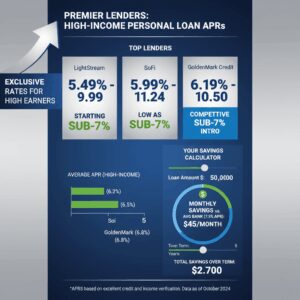
- Unsecured personal loans: Average APR around 11–15% for good credit; wide range roughly 8–30%. Terms 2–7 years. Fast funding—sometimes same day.[3][4][6][7]
- Home equity loans: Often mid–single to high–single digits, typically lower than personal loans and far below most credit cards. Terms 5–30 years.[2][6][8][9]
- HELOCs: Variable rates, usually a bit lower than personal loans and credit cards but tied to prime rate; draw period 5–10 years, then repayment.[1][2][4][5][8][9]
- Credit cards: Average APR around 20–22% on carried balances, but 0% intro APR offers for 12–21 months are widely available if you qualify.[2][4][5]
Decision Tree #1: You Need the Money Fast
If your contractor starts next week…
Speed is where personal loans and 0% intro APR credit cards shine. Many online lenders (like SoFi, LightStream, Upgrade, Discover Personal Loans) can approve and fund in 1–3 days for qualified borrowers, sometimes even same day.[3][4][6][7]
By contrast, home equity loans and HELOCs usually require a full underwriting process with an appraisal, which can stretch to 2–4 weeks or longer.[2][4][6][8]
Quick-choice guide:
- Under $10,000 and you can pay it off in 12–18 months: Look for a 0% intro APR credit card from issuers like Chase, Citi, or Wells Fargo. Many cards offer 0% for 15–21 months with a 3–5% balance transfer or intro fee.
- $10,000–$40,000 and you need funds in days: A fixed-rate personal loan from a reputable lender can lock in predictable payments without touching your home equity.[2][3][4][6][7]
Decision Tree #2: How Much Home Equity Do You Have?
Equity is simply the value of your home minus what you owe on your mortgage. If you have substantial equity, home equity loans and HELOCs are usually the cheapest way to borrow for big projects.[2][5][8][9]
If you have 20%+ equity and a strong credit score (680–700+)
According to lenders and mortgage industry guides, HELOCs and home equity loans for home improvement typically require FICO scores in the high 600s or better, with loan amounts often capped around 80–85% combined loan-to-value (your mortgage plus the new loan vs. home value).[2][5][8][9]
When this fits you, a decision tree looks like this:
- Project cost is well-defined (e.g., $60,000 kitchen): A home equity loan gives you a lump sum with a fixed rate and payment—easier to budget for big, one-time projects.[2][6][8][9]
- Project will be done in phases or costs may creep: A HELOC gives you a line you can draw from as needed, paying interest only on what you use during the draw period.[1][2][4][5][8][9]
If you have little or no equity
If you bought recently or refinanced at a high LTV, a HELOC or home equity loan may not be available—or the approved amount may be too small. In that case, the realistic tools are:
- Personal loans (often up to $50,000 or more for top-tier borrowers) with no collateral required.[2][3][4][6][7]
- 0% intro APR cards for small, quickly repaid projects.[1][2][4][5]
This is where you’re paying more for flexibility and speed, but you’re not risking foreclosure if something goes wrong.


Decision Tree #3: Match the Tool to Project Size
For small upgrades ($500–$5,000)
- Best fit: Cash or a 0% intro APR credit card you can pay off before the promo ends.
- Why: Application is fast, you may earn rewards, and you avoid closing costs and appraisals.[1][2]
For mid-size projects ($5,000–$30,000)
- Good credit (700+), no equity, fast timeline: Consider a fixed-rate personal loan from an online lender or your bank.
- Example: A borrower with strong credit might see offers in the 9–13% APR range for a 3–5 year term, compared with 20%+ on a standard credit card.[3][4][6][7]
- Have equity and a bit more time? Compare a small HELOC—even for $20,000, a lower rate and interest-only draw period can meaningfully cut your monthly payment.[1][2][4][5]
For major projects ($30,000+)
- Strong equity and solid income: A home equity loan or HELOC almost always beats personal loans on rate for large balances.[2][5][8][9]
- Fixed-cost remodel: Home equity loan = predictable.
- Open-ended project (multi-phase addition, multi-year upgrades): HELOC = flexible; you borrow only as you go and pay interest just on what you’ve used during the draw period.[1][2][4][5][8][9]
Personal Loan vs. HELOC vs. Credit Card: Hidden Traps to Avoid
Personal loans: Don’t be fooled by just the monthly payment
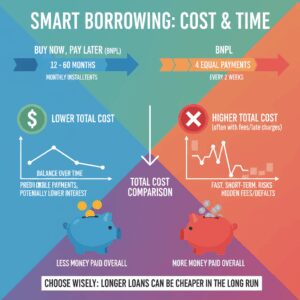
According to rate trackers and credit bureaus, the average APR on a 24‑month personal loan sits in the low double digits, dramatically lower than the 20%+ average on credit cards—but still higher than many HELOCs or home equity loans.[3][4][6][7]
Watch for:
- Origination fees: 1–8% upfront can quietly raise your effective rate.
- Prepayment penalties: Less common now, but still worth checking if you plan to pay the loan off early.
HELOCs and home equity loans: Your house is the collateral
HELOCs and home equity loans usually offer lower rates because they’re secured by your home.[2][4][6][8][9] But if your income drops or expenses spike and you can’t pay, you’re not just missing a credit card payment—you could eventually face foreclosure.
Also understand:
- Variable-rate risk (HELOC): Your payment can jump when rates rise or when you exit the interest-only draw period.[1][2][4][5]
- Closing costs: Some lenders advertise “no closing cost” HELOCs but may charge annual fees or recoup costs in the rate.
0% intro APR credit cards: FOMO meets fine print
0% cards are powerful for disciplined borrowers: you can effectively borrow for free for 12–21 months if you pay the balance before the promo ends.[2][5]
But:
- Miss the payoff window and your rate can jump to 20%+ on the remaining balance.
- Balance transfer or intro fees (commonly 3–5%) act like prepaid interest.
- High utilization can temporarily hurt your credit score if you max out the card.
Practical 2026 Playbook: How to Choose in 15 Minutes
Step 1: Get your numbers
- Estimate your project cost, then add 10–20% for overruns.
- Check your latest home value estimate and mortgage balance to gauge equity.
- Pull your credit score from your bank or card app.
Step 2: Run the right route based on your profile
- High equity, big project, not urgent: Compare offers for a home equity loan vs. HELOC from your current mortgage lender and one credit union. Prioritize rate and fees, but don’t ignore flexibility.
- Little equity, mid-size project, need funds soon: Pre-qualify with 2–3 personal loan providers (many let you check rates with a soft credit pull) and compare total cost, not just the monthly payment.
- Small project, strong cash flow: Look for a 0% intro APR credit card with a promo period long enough to pay it off comfortably—then set automatic payments to clear it before the promo expires.

Your Next Move: Lock In the Right Tool Before Prices Climb
Contractor rates and material costs rarely move backward, and credit conditions can tighten quickly when the economy shifts. The borrowers who come out ahead in 2026 aren’t the ones who picked the trendiest tile—they’re the ones who:
- Matched their project size to the right financing tool.
- Aligned their risk tolerance with whether or not to tap home equity.[2][4][6][8][9]
- Used 0% offers and fixed-rate loans strategically instead of by default.
If you’re within 60 days of starting a project, don’t wait. In the next 24 hours:

- List your project scope and realistic budget.
- Check your equity and credit score.
- Shortlist one personal loan provider, one HELOC or home equity lender, and one 0% intro APR card you could qualify for.
Then run real numbers—monthly payments and total interest—for each option. One will almost always stand out as the clear winner for your 2026 home upgrade. Choose it before you sign that contractor bid, and you’ll enjoy your new space without second-guessing how you paid for it.
Unlock Full Article
Watch a quick video to get instant access.