Thinking About Bringing Home a Dog Today? Here’s the Real First-Year Cost (and How to Keep It Affordable)

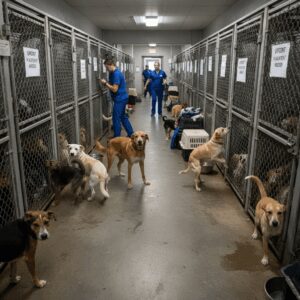
You spot the perfect dog, the shelter says you can take them home today, and your heart says “yes” before your brain has even checked your bank account. That rush is real—but so is the bill that follows over the next 12 months.
This guide breaks down what the first year with a new dog realistically costs on a tight budget—using current 2024–2025 prices from shelters, vets, and major retailers—and exactly where you can save without cutting corners on your dog’s welfare.


The Adoption Fee Is Just the Opening Bid
Many people only budget for the adoption fee, but that’s usually the cheapest part of year one.
Recent shelter fees in California give a good benchmark: LA Animal Services lists adult dog adoptions at about $102–$122 and puppies at $150, which already includes spay/neuter, vaccines, and microchip.[2] Pasadena Humane charges $150 for adult dogs and $300 for puppies, again including surgery, vaccines, and microchip plus a 20% coupon for their pet store.[3] Some municipal shelters charge even less—Riverside County, for example, ranges from $105 for dogs new to the shelter down to $20 for dogs who have been there 31+ days.[4]
On the savings side, there are growing waves of fee-waived or reduced-fee events funded by groups like the ASPCA. LA Animal Services has run promos with dogs for $20 and cats free during “Clear the Shelters” campaigns, plus special reduced fees for larger dogs.[5] A 2025 California “Adopt-a-Pet Day” led by the ASPCA and partners is waiving adoption fees for participating shelters statewide for one day.[7]
Budget reality check: if you adopt outside a promo, plan roughly $50–$200 for your adoption fee depending on region, age, and shelter.
Essential One-Time Setup Costs (Day 1–30)
Here’s what you realistically need in the first month—not the Instagram version, the survival kit.
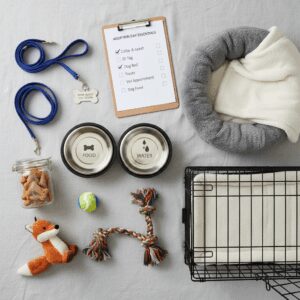
1. Core Supplies You Shouldn’t Skip
Shopping smart matters more than shopping cute. You can fully equip a new dog for under $200 if you prioritize function over aesthetics.
Sample budget build using current big-box and online prices (approximate, mid-2024):
- Crate (for training and safety): Mid-range wire crate like the Midwest iCrate 36″ usually runs $55–$80 depending on size and sales.
- Bed: A basic orthopedic-style bed from Amazon Basics or Frisco often costs $25–$40 for medium dogs.
- Food & water bowls: Stainless-steel sets are typically $10–$20.
- Collar & ID tag: Expect around $15–$25 combined at Petco/PetSmart-level pricing; many shelters also offer low-cost tags.
- Leash: A 6-foot nylon leash is commonly $10–$20.
- Starter food: A 15–20 lb bag of budget-friendly but decent kibble (e.g., Purina One, Iams) is about $25–$45 depending on brand and sales.
- Poop bags: Bulk rolls can bring cost down to $5–$10/month; a starter pack is often under $10.
- Basic training treats: Around $5–$10 for a bag of small, soft treats.
- Toys (3–4): A mix of a chew (like Nylabone or Benebone), a tug toy, and a puzzle toy usually totals $25–$40 if you buy strategically.
Lean, realistic setup estimate: roughly $150–$225 for initial supplies, assuming you choose budget but safe brands and watch for sales.
2. First Vet Visit & Preventive Care
Even if your shelter includes vaccines, you still need a baseline exam and preventive meds.
Many shelters partner with clinics like VCA to offer a free initial exam within 14 days; LA Animal Services adopters receive a Healthy Start Certificate worth up to $250 in follow-up veterinary care in that window.[5] Pasadena Humane likewise includes a free health exam with adoption.[3]
Outside such offers, a first exam at a private vet often runs $60–$120 depending on location. Heartworm tests, additional vaccines, and fecal tests may each add $25–$60 per item. A monthly combined flea/tick and heartworm preventive runs about $20–$40/month depending on weight and product.
Budget day-one medical cushion: if you don’t have free-exam perks, set aside at least $150–$250 for that first month of vet care and preventives.

Year One Monthly Costs: What It Really Adds Up To
Once the initial rush is over, the quiet costs are what can make or break your budget. Here’s a conservative breakdown assuming a healthy, medium-sized adult dog with no major medical surprises.
Food: Where Most of Your Dog’s Budget Lives
A 30–40 lb dog typically eats 2–3 cups of kibble a day. A 28–30 lb bag of mid-tier food is about $40–$70 and lasts 4–6 weeks at that size. That works out to roughly $40–$60/month for quality kibble if you avoid premium boutique brands and stick to well-researched options from major manufacturers.

Subscribing through major retailers can shave off 5–10%, and warehouse clubs often match or beat that price-per-pound if you have membership.
Preventives: The Non-Negotiable Insurance
Flea, tick, and heartworm preventives are far cheaper than treating infestations or heartworm disease. Expect around $20–$40/month combined, depending on your dog’s weight and whether you use all-in-one or separate products.
Routine Vet Care & Vaccines
After the first visit, many dogs only need annual wellness exams and boosters. Averaged over the year, plan about $15–$25/month for basic preventive vet care if you use a standard clinic and your dog is healthy. Low-cost vaccine clinics and community events can bring that closer to the lower end.
Licensing & ID
Many cities require an annual dog license. In Los Angeles, for example, adoption fees for LA City residents include the first-year license.[2] After that, typical renewals in many cities fall around $20–$35/year, or roughly $2–$3/month when averaged out.
Training & Enrichment
This is where same-day adopters often either overspend or underinvest.
- Group obedience classes at mainstream training centers often cost $150–$250 for a 4–6 week course. Spread over the year, that’s about $15–$25/month if you do one foundational course.
- Free or low-cost programs are expanding. For example, dogs adopted from LA Animal Services may qualify for free dog training classes at the Paws for Life K9 Rescue People & Pet Innovation Center.[5]
- DIY training with books and online courses can cost as little as a one-time $20–$50 if you’re disciplined.
Putting It All Together: A Conservative Year-One Budget
Approximate low-to-mid estimates for a healthy adult dog, assuming adoption from a shelter that includes spay/neuter and shots:
- Adoption fee: $50–$200 (one-time)
- Startup supplies: $150–$225 (one-time)
- First vet visit & tests: $0–$250 (one-time, depending on free exam offers)
- Food: $480–$720/year (~$40–$60/month)
- Preventives: $240–$480/year (~$20–$40/month)
- Routine vet care over year: $180–$300/year (~$15–$25/month)
- Training & enrichment: $60–$300/year (mix of classes and DIY)
- License renewal & ID: ~$20–$35/year
Realistic first-year total: even on a careful budget, expect roughly $1,200–$2,000. That range assumes no major medical emergencies, no specialty diets, and no paid dog walking or daycare.
Five Smart Ways to Slash Costs Without Shortchanging Your Dog
1. Time Your Adoption Around Promos
Because national organizations are funding adoption events more aggressively, strategic timing can save you the entire adoption fee.
- Watch for campaigns like “Clear the Shelters,” “National Dog Month” promos, and statewide events such as California’s Adopt-a-Pet Day where adoption fees are fully waived.[5][7]
- Local municipalities sometimes offer discounted rates for seniors, veterans, and long-stay dogs, as Riverside County does with 50% off senior dog adoptions and free adoptions for active duty and veterans.[4]
2. Prioritize Shelters That Bundle Medical Care
Choosing a shelter that includes spay/neuter, microchip, and core vaccines can save hundreds in year one. LA Animal Services, Pasadena Humane, and many city shelters bundle these, plus perks like free health exams and coupons.[2][3][5][6]
3. Build a “Bare-Bones but Safe” Starter Kit
Skip the fashion collars and themed toy sets on day one. Instead:
- Buy neutral, durable basics (crate, bowls, leash, collar, bed) from value lines such as Amazon Basics, Frisco, or store brands.
- Use shelter or rescue coupons—Pasadena Humane, for example, offers a 20% off coupon to their pet store with each adoption.[3]
- Check local Buy Nothing and community groups for gently used crates and gates; sanitize thoroughly before use.
4. Use Low-Cost Clinics & Vouchers for Routine Care
Many cities now support networks of low-cost vaccine and spay/neuter clinics, and some shelters distribute discount vouchers. Free initial exams via partners like VCA (offered to some adopters) can offset the most expensive early visit.[3][5]
5. Invest in Training Upfront to Avoid Costly Problems Later
Behavior problems are a leading cause of dogs being returned to shelters—and they get expensive fast if you end up needing emergency boarding, repairs, or intensive behaviorists. Tackling basics early with a free class (where offered) or an affordable group class is often cheaper than fixing entrenched issues later.[5]

A 10-Minute Pre-Adoption Money Check
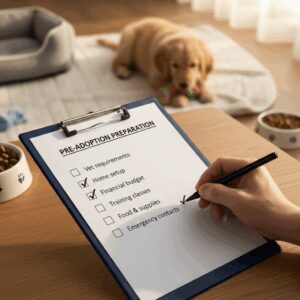
Before you say “yes” to taking a dog home today, run through this quick checklist:
- Emergency cushion: Do you have at least $500 you could tap in a true medical emergency?
- Monthly room: Can you comfortably free up $100–$150/month for food, preventives, and basic care without relying on credit?
- First 30 days: Can you cover $300–$600 upfront (adoption fee, supplies, and first vet visit) if your shelter doesn’t bundle everything?
- Schedule: Can you attend at least one training class or commit to daily at-home training?
Ready to Say Yes—Wisely?
Bringing home a dog the same day you fall for them can absolutely work—if your finances, not just your feelings, are ready. Use the numbers above to sketch a quick first-year budget, then:

- Call or check local shelters for upcoming reduced-fee or fee-waived events.
- Make a bare-bones shopping list and price it out at two different retailers.
- Locate at least one low-cost vet or clinic and ask what their new-dog package typically costs.
If those answers still look doable, that “today” dog might fit into your life for the next decade—without wrecking your bank account.
Unlock Full Article
Watch a quick video to get instant access.