Turn Your Drafty Home Into a Green Machine: Smart Ways to Use Personal Loans for Energy Upgrades Without Wrecking Your Budget
If your power bill keeps creeping up and your house still feels drafty, you’re quietly paying a “waste tax” every single month. The fastest way to stop it? Stack smart energy upgrades with the right kind of personal loan, then slash the net cost using federal tax credits, rebates, and utility incentives.
In 2025, you don’t have to refinance your mortgage or drain your savings to go green. Unsecured personal loans, specialized green loans, and energy-efficiency financing programs make it possible to fund solar panels, heat pumps, new windows, and insulation now—and use the energy savings and tax credits to blunt the impact of borrowing.
Why Energy-Efficient Upgrades Are a “Hidden Asset Class”
Energy-efficient improvements don’t just feel good ethically; they behave like investments. According to multiple studies cited by major lenders, energy upgrades can boost home value by roughly 2%–8% while cutting monthly utility costs.[1] Combine that with 30% federal tax credits on many upgrades and you’re not just renovating—you’re buying a long-term cash-flow improvement.[2]

Key upgrades homeowners are prioritizing in 2025:
- Solar PV systems (roof-mounted arrays)
- High-efficiency heat pumps (heating and cooling)
- Triple-pane or low-E energy-efficient windows
- Attic and wall insulation + air sealing
- Heat pump water heaters and smart thermostats
Each of these can be financed with an unsecured personal loan or dedicated green loan, often without tapping home equity.[1][4][8]
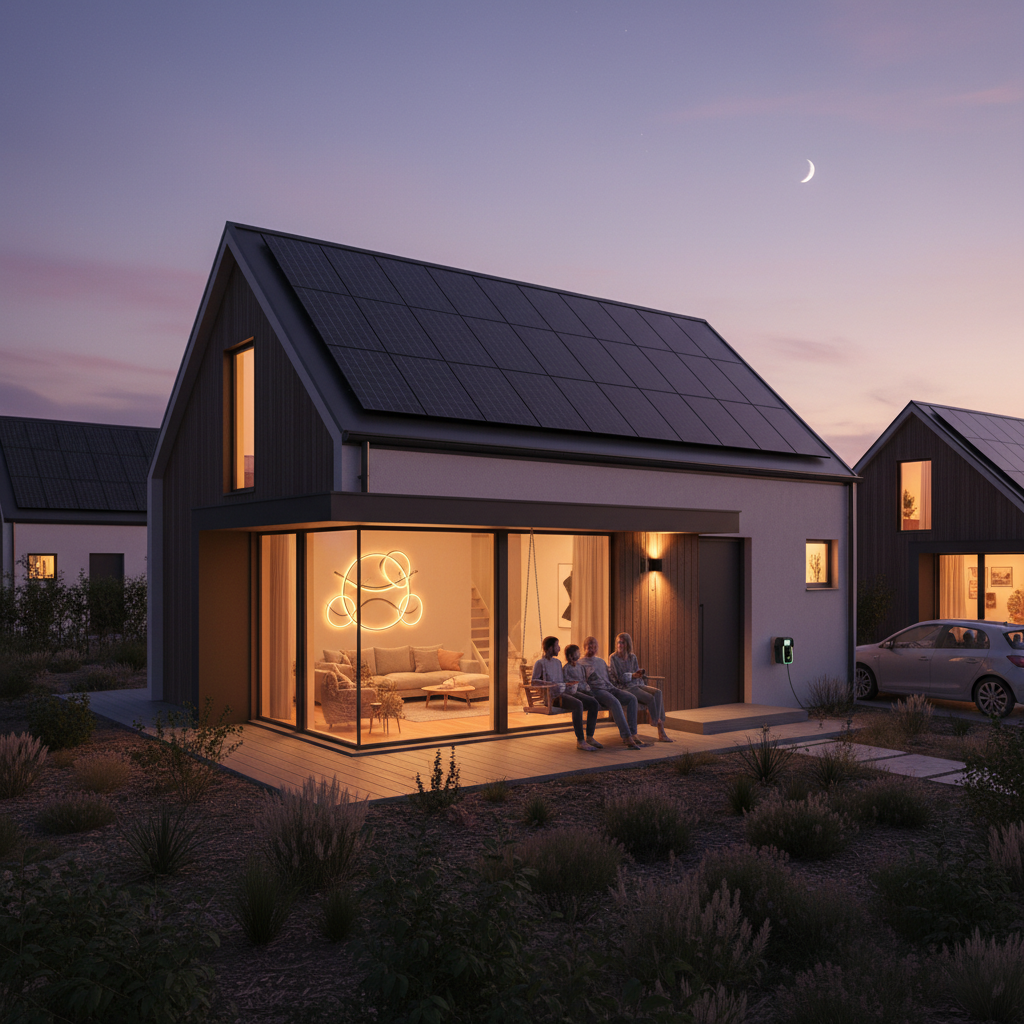
[IMAGE: Cozy modern home at dusk with rooftop solar panels glowing under the sunset, interior lights on, suggesting comfort and low energy bills.]
Step 1: Decide Which Green Upgrades Pay Off Fastest
Before you look at loans, lock in your upgrade plan and rough budget. That helps you avoid over-borrowing and gives you leverage when comparing lenders.
High-ROI upgrade ideas with typical 2025 price ranges
Prices vary by region, but national averages offer a solid anchor:
- Solar panels (6–8 kW system): About $18,000–$24,000 before incentives in many markets.
- Air-source heat pump: Roughly $10,000–$17,000 installed for a typical home.
- Energy-efficient windows: Around $700–$1,200 per window installed for high-performance units.
- Insulation + air sealing: Frequently $3,000–$8,000 depending on house size and scope.
Federal incentives dramatically improve those numbers. The Energy Efficient Home Improvement Credit covers 30% of qualified costs up to $3,200 per year for upgrades like windows, insulation, and certain HVAC systems, while the Residential Clean Energy Credit gives 30% back on solar, batteries, and geothermal with no dollar cap until phase-out starts in 2033.[2]
Step 2: Choose the Right Type of Loan for Green Projects
Most homeowners don’t realize they can use a simple unsecured personal loan—or a dedicated green loan—to fund major eco-upgrades.[1][4][8] That’s where you can move quickly without touching your mortgage.
1. Standard personal loans geared to home projects
These are unsecured loans you can use for almost any home improvement, including energy upgrades.[1][3][9]
- PNC Bank Home Improvement Personal Loan: Unsecured, up to $35,000, no collateral required; typical APRs in the mid– to high–single digits for well-qualified borrowers.[9]
- Discover Personal Loans (for green projects): Marketed for home improvements, including solar, geothermal, efficient windows and insulation; unsecured, fixed rates, no origination fee.[1]
- Rocket Loans Personal Loans: Often used for a $25,000 energy-efficiency project in their own examples; fixed rates and fast funding.[2]
When these shine: You want quick approval, predictable fixed payments, and you don’t want to put your home up as collateral.
2. Dedicated green and energy-efficiency loans
Some lenders offer discounted rates if you prove the project is energy efficient.
- UNFCU Home Improvement Loan (Green Discount): Rates starting around 8.25% APR with documentation that the project is energy efficient.[7]
- SELF (Solar and Energy Loan Fund): Low-interest loans targeted to renewable energy, efficient HVAC, solar AC, insulation, and more, for a wide range of credit profiles.[10]
- Credit union green loans: Many local credit unions now advertise “green loans” for solar, windows, and efficient appliances at slightly lower rates than standard personal loans.[4]
When these shine: You’re doing clearly green work—solar, heat pumps, insulation—and you can provide contractor specs to qualify for lower rates.
3. Government-backed energy-efficient financing (for comparison)
If you’re also refinancing or buying, you may compare personal loans with mortgage-based options like Fannie Mae HomeStyle Energy or Freddie Mac GreenCHOICE mortgages, which roll upgrade costs into your home loan at mortgage-level rates.[5][6] These aren’t personal loans, but they can beat personal-loan APRs when you’re already touching your mortgage.
[IMAGE: Side-by-side comparison graphic of an old HVAC furnace vs. a sleek new heat pump system with efficiency arrows and savings icons.]
Step 3: Use Tax Credits, Rebates, and Utility Incentives to Shrink Your Loan “Net Cost”
The real trick in 2025 is not just finding a decent rate—it’s stacking incentives so that your effective, net cost is far below the amount you borrow.
Leverage the 30% federal credits
According to current IRS-aligned guidance shared by lenders:

- Energy Efficient Home Improvement Credit: 30% back, up to $3,200 per year for qualified improvements like insulation, exterior doors and windows, and certain high-efficiency HVAC equipment.[2]
- Residential Clean Energy Credit: 30% back on the full cost of solar panels, solar batteries, geothermal systems, and more, with no annual or lifetime cap until phaseout begins in 2033.[2]
Example: Finance a $20,000 solar project with a personal or green loan. A 30% clean energy credit could give you a $6,000 tax credit, which you can later use to make a large principal payment and shorten the payback period substantially.
Stack state and utility rebates
Many states and utilities now offer separate rebates for heat pumps, insulation, and efficient windows—sometimes worth thousands of dollars per project.[4][5][8] That’s additional “free money” that can be applied toward loan payoff in the first year or two.
To avoid missing out:
- Check your state energy office and local utility websites for current rebate lists.[5]
- Ask contractors if they are approved for specific utility programs (some handle the paperwork for you).
- Time projects so you can spread improvements over multiple tax years to maximize annual federal credit caps.[2]
Step 4: Compare Real-World Loan Scenarios for a $25,000 Green Upgrade
To see how the math plays out, consider a $25,000 energy-efficiency project (for example, a heat pump plus insulation) financed via different options, similar to scenarios illustrated by major lenders.[2]
Illustrative comparison (ballpark numbers)
Assume:
- Personal/green loan at roughly 9%–11% APR for 7 years
- Monthly payment in the $400 range
- Energy savings of $100–$150 per month from lower utility bills
- Federal credit of roughly $3,200 for qualifying upgrades, plus any state rebates
This means part of your monthly payment is offset by immediate energy savings, and your tax credits plus rebates can be used to knock down principal early. Over the life of the project, your “real” cost can be far lower than the headline price.
Step 5: How to Shop for a Green-Friendly Personal Loan (In the Right Order)
Use this quick playbook so you don’t leave cheap money on the table or overpay on interest:
1. Pre-qualify without hurting your credit
Many lenders, like Discover, Rocket Loans, and PNC, let you check estimated rates with a soft credit pull online in seconds.[1][2][9] Collect 3–5 offers so you can compare APRs, fees, and terms.
2. Ask specifically about green or energy-efficiency discounts
Credit unions, specialty funds like SELF, and some banks offer lower rates if you’re installing solar, heat pumps, insulation, or efficient windows.[4][7][10] You may need a contractor bid or product spec sheet to qualify.
3. Match loan term to the “payback horizon”
Try to keep the loan term at or just beyond the period when your energy savings plus incentives will fully cover the cost of the project. For many common upgrades, that’s roughly 7–12 years.
4. Plan your principal attack strategy
Before you sign, decide how you’ll use credits and rebates:
- Apply tax credits (when received) as a lump-sum extra payment directly to principal.
- Do the same with state and utility rebates.
- Consider setting up automatic extra principal payments equal to a portion of your monthly energy savings.
[IMAGE: Homeowner reviewing loan options on a laptop at a kitchen table, papers labeled “tax credit” and “rebate” visible, with an energy-efficient window and thermostat in the background.]
Step 6: Avoid the Most Common Green-Upgrade Financing Mistakes
Even savvy homeowners leave money on the table or overpay on interest. Watch out for:
- Ignoring unsecured personal loans and jumping straight to a costly contractor financing plan with higher APRs.
- Not verifying incentive eligibility before picking products—some windows, heat pumps, or solar equipment must meet specific efficiency ratings to qualify for credits and rebates.[2][5]
- Borrowing more than the project bid “just in case,” which raises interest costs and makes it harder to attack the principal.
- Letting tax credits sit in your refund instead of using them to pay down the loan when you receive them.
Your Next 48-Hour Action Plan
If you want to ride this wave of incentives instead of watching energy prices climb, move fast while 30% federal credits and aggressive state rebates are still on the table.

- Within 24 hours: Identify your top one or two upgrades (solar, heat pump, windows, insulation). Get at least two contractor quotes with itemized costs and efficiency specs.
- Within 48 hours: Pre-qualify with 3–5 lenders—mix at least one national personal-loan lender (e.g., Discover, Rocket Loans, PNC) with one local credit union and, if available, a program like SELF or a green loan from your credit union.[1][2][4][7][9][10]
- Before you sign: Confirm exactly which portions of the project qualify for the 30% credits and what state/utility rebates you can claim, then model how you’ll use that money to kill your principal quickly.
If you wait a year, you’ll pay another 12 months of inflated energy bills and you risk facing less generous incentives later. Lock in your upgrades, secure a loan structured around today’s 2025 rate environment, and let tax credits and rebates do part of the heavy lifting. Your future self—and your future utility bills—will thank you.
Unlock Full Article
Watch a quick video to get instant access.