The First 72 Hours: Why This Window Matters More Than You Think
You’ve just signed the adoption papers. Your new dog is officially yours. But here’s what most first-time adopters don’t realize: the next 72 hours will determine whether your adoption succeeds or becomes another heartbreaking return statistic. Shelters report that approximately 47% of returned dogs come back within the first three months, with behavioral issues and poor adjustment cited as primary reasons. The good news? Most of these returns are preventable with the right preparation and knowledge during those critical first three days.
This isn’t just about surviving the first weekend—it’s about building the foundation for a lifetime of companionship. Your newly adopted dog is experiencing unprecedented stress: new environment, new people, new smells, new routines. Everything is foreign. Your job during these 72 hours is to create predictability, safety, and calm while gathering intelligence about your dog’s personality, triggers, and needs.
Hour Zero to Hour 6: Before You Leave the Shelter
What You Must Accomplish Before Walking Out That Door
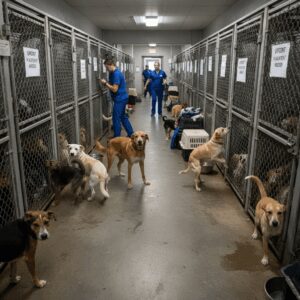
Before you leave the adoption center, have a detailed conversation with shelter staff. This is your only opportunity to extract institutional knowledge about your dog. Ask specific questions: What was their behavior like in the shelter? Did they show any resource guarding with food or toys? How do they react to other dogs, cats, children? What’s their exercise level? Any medical conditions or medications? Request a written summary of their medical history, including vaccination records and any behavioral notes.
Many shelters, including the Silicon Valley Animal Control Authority (which operates daily adoption hours from 12:00pm to 5:00pm), provide adoption paperwork that includes basic information, but you need to ask follow-up questions verbally. The staff has observed your dog in ways the paperwork won’t capture.
Obtain supplies before leaving if possible. Ask if the shelter has a small bag of the food your dog has been eating. Sudden diet changes cause digestive upset—the last thing you need on day one is explosive diarrhea. If they don’t have spare food, take note of the brand and buy the same type immediately.
Essential Pre-Departure Checklist
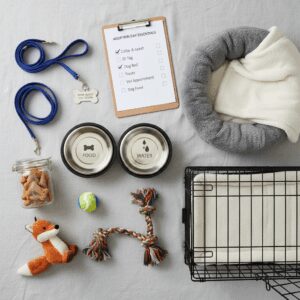
Before your dog enters your car, ensure you have: a collar and leash (properly fitted), ID tags with your phone number, a crate or carrier for safe transport, paper towels and enzymatic cleaner (accidents happen), and the shelter’s emergency contact information. If your dog will need medications, get detailed instructions in writing.
Hour 6 to Hour 12: The Critical Car Ride and First-Night Setup
Transporting Your Dog Safely
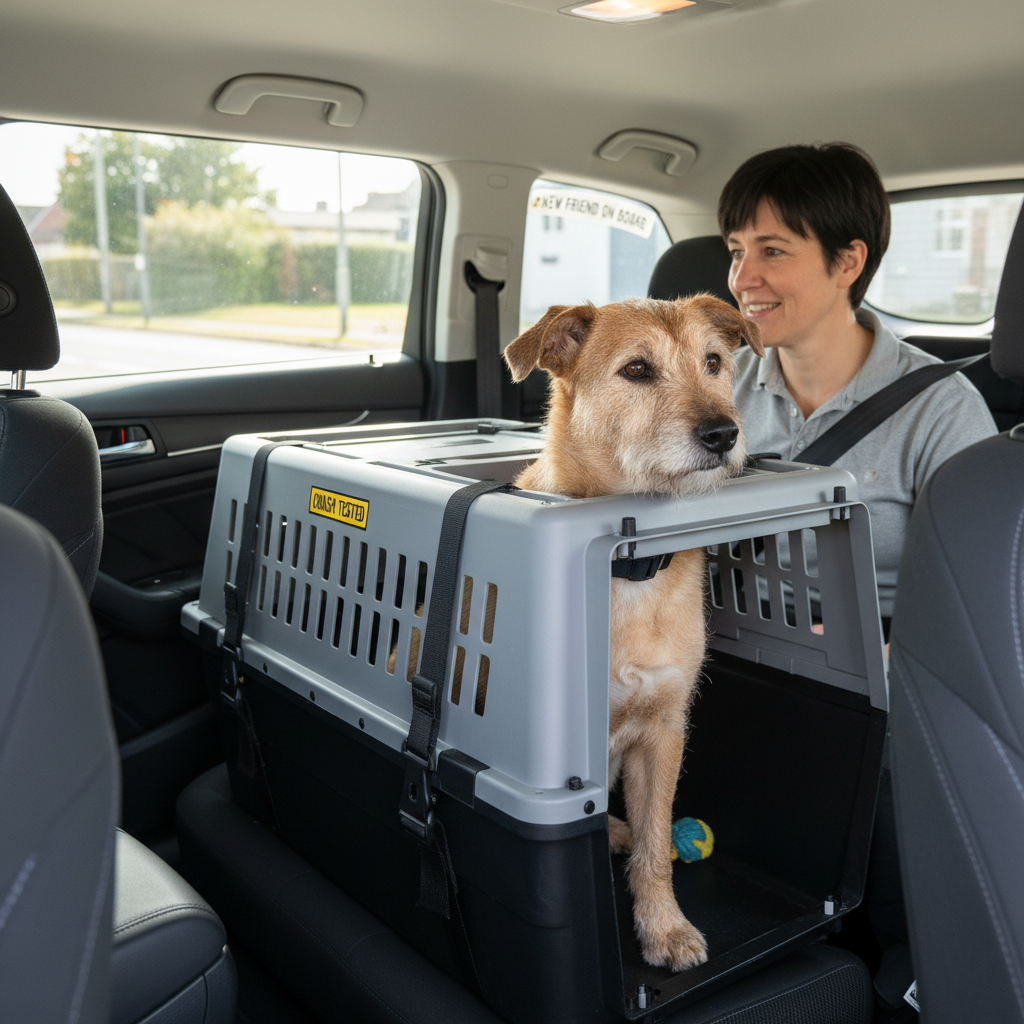
Never let your newly adopted dog roam freely in your car. Use a crash-tested crate, harness, or carrier. Frightened dogs in moving vehicles can cause accidents or escape. The Ruffland Performance Series Dog Crate ($180-$350 depending on size) is a crash-tested option that provides security. For smaller dogs, the Sleepypod Mobile Pet Bed ($150-$200) offers both safety certification and comfort.
Keep the car quiet. No loud music, no excited talking. Your dog needs calm. Drive smoothly, avoid sudden stops. If your dog shows signs of car sickness (drooling, panting heavily), pull over safely and let them rest. Some dogs need 20 minutes to acclimate; others need two hours.
Creating Your Dog’s Safe Room
Before your dog enters your home, designate one room as their initial territory. This is crucial. A 10×10 bedroom, bathroom, or laundry room works perfectly. This room should contain: a crate with the door left open (crates become safe havens, not prisons), water bowl, food bowl (place it away from water to prevent water contamination), a comfortable bed (the Kirkland Signature Orthopedic Dog Bed from Costco at $40-$60 is budget-friendly and supportive), and minimal toys initially.
Remove anything dangerous: electrical cords, cleaning supplies, medications, small objects they could swallow. Close off access to the rest of your home temporarily. Your dog will have time to explore later. Right now, they need to understand one safe space thoroughly.
The First Night Protocol
Feed your dog their regular meal at their normal time (get this information from the shelter). Use the same food they’ve been eating. Offer water frequently but don’t leave water out all night if they’re not housetrained yet—this causes nighttime accidents.
Expect that your dog might not eat. Stress suppresses appetite. Don’t panic. Offer food, leave it for 15 minutes, remove it. Try again in a few hours. Most dogs eat within 24 hours once they feel safe.
For the first night, consider whether your dog sleeps in their crate in your room or in their safe room. Many trainers recommend keeping the crate near your bed initially—your presence is calming. Use white noise (a fan, white noise machine, or an app like myNoise at no cost) to mask household sounds that might startle them.
Day Two: Establishing Routines and Gathering Behavioral Intelligence
The Potty Schedule Foundation
Take your dog outside frequently: immediately after waking, 15-30 minutes after eating, after playtime, and before bed. Use a consistent command like “go potty.” When they eliminate outside, celebrate enthusiastically and reward with high-value treats (freeze-dried liver treats like Primal Freeze-Dried Beef Liver, $12-$18 per bag, are irresistible to most dogs).
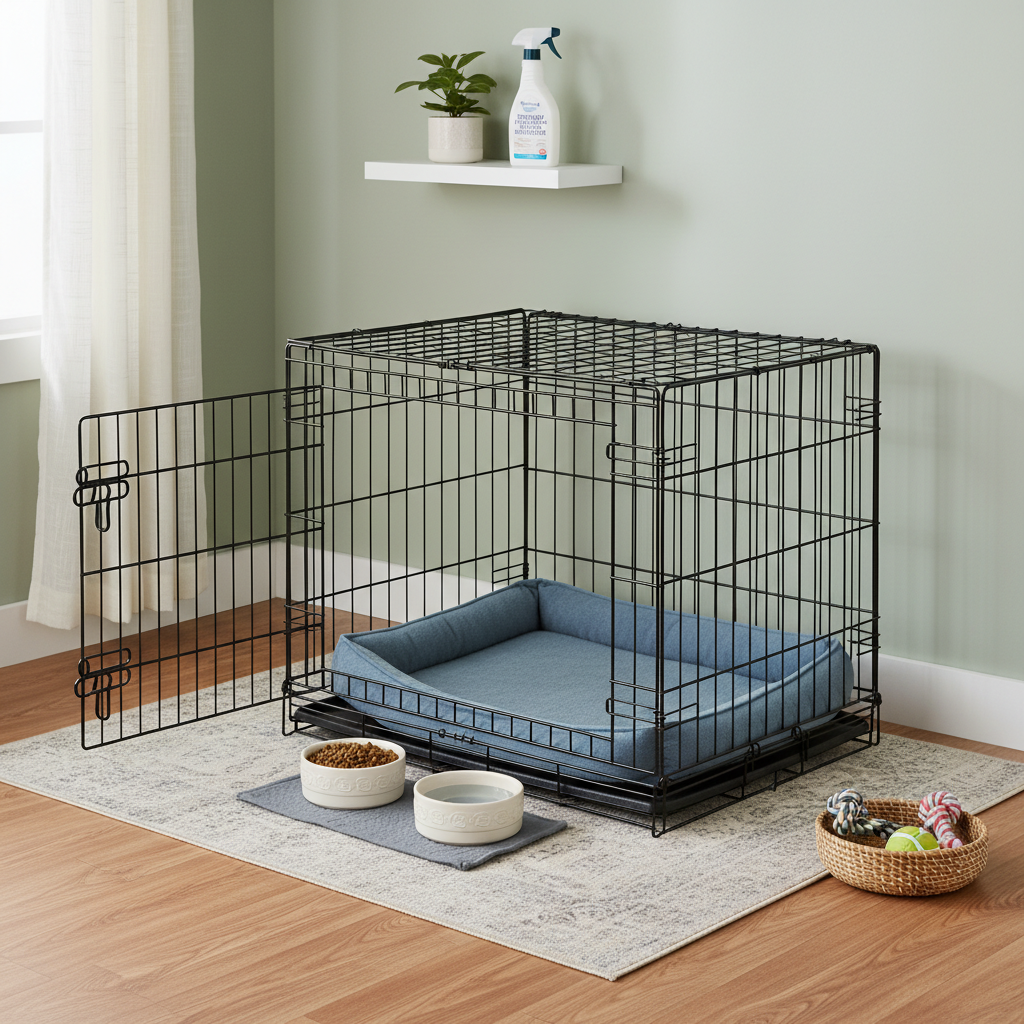
Expect accidents indoors. When they happen, clean thoroughly with enzymatic cleaner (Nature’s Miracle or Rocco & Roxie, both around $8-$12 per bottle) to eliminate odor markers that encourage repeat accidents in the same spot.
Behavioral Observation During Day Two
Spend most of day two simply observing. How does your dog respond to: doorbell sounds, other family members, meal preparation, being alone for short periods? Does your dog have any obvious fears or anxieties? Do they resource guard toys or food? Are they destructive when bored? Document these observations—you’ll need them for your veterinary visit on day three.
Limit exercise on day two. A 15-20 minute walk is sufficient. Your dog’s immune system is stressed from the shelter environment. Excessive exercise taxes their system further.
Day Three: Professional Assessment and Integration
The Veterinary Wellness Check
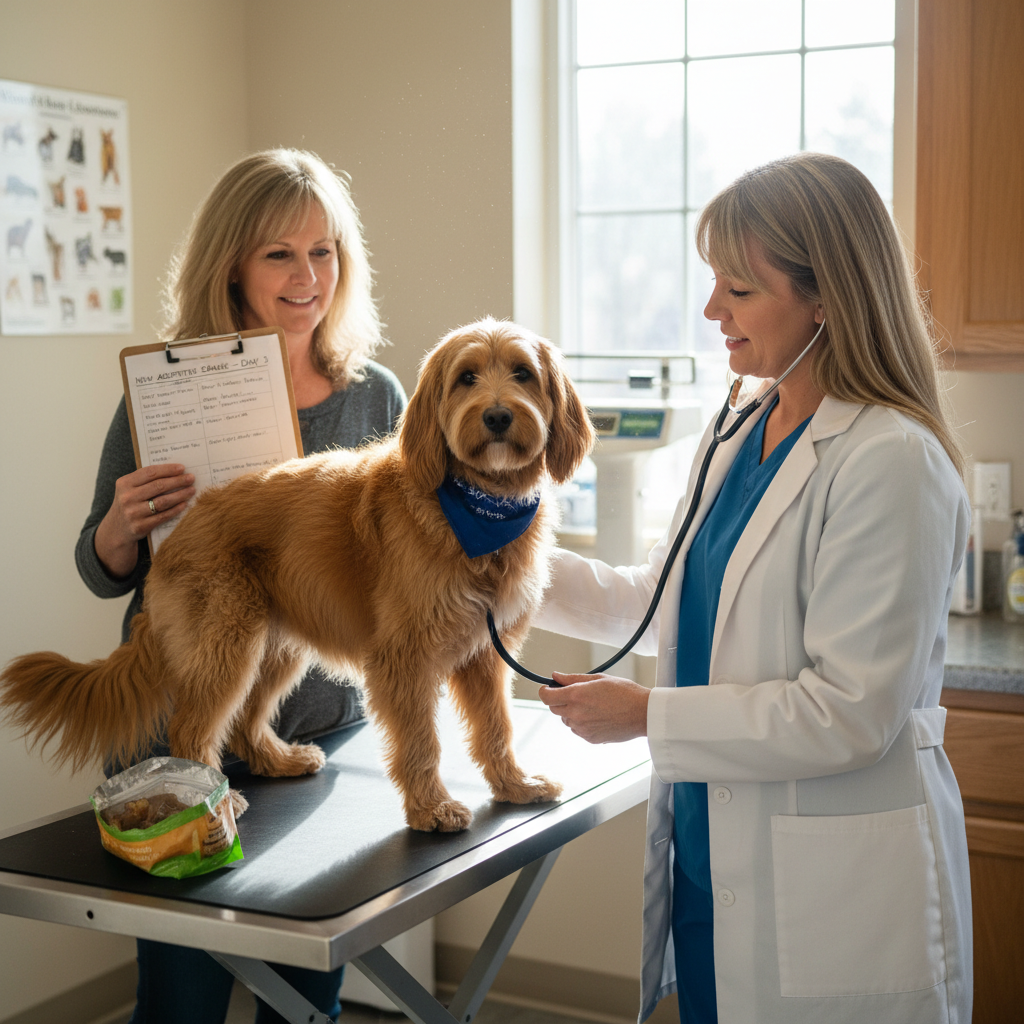
Schedule a wellness appointment with a veterinarian for day three if possible. This isn’t optional. Your vet will: confirm the shelter’s medical records, check for parasites or illnesses, assess overall health, and provide baseline behavioral observations. Bring your documented observations from days one and two. If you noticed any concerning behaviors, mention them now. Many vets can recommend trainers or behaviorists if needed.
Typical first-visit exam costs range from $75-$150 depending on your location and whether additional testing is needed.
Introducing Your Dog to Your Full Home and Family
By day three, if your dog is showing calm behavior in their safe room, gradually open access to other areas of your home. Do this slowly—one room at a time. Keep the safe room accessible always; it remains their retreat.
If you have other pets, day three is typically too early for full integration. Consult your vet about the timeline. If you have children, establish rules now: no pulling ears or tail, no disturbing the dog while eating, no entering the safe room without permission.
Essential Products for Your 72-Hour Success Kit
Compile these items before day one ends: enzymatic cleaner (Nature’s Miracle, $10), high-value training treats (Primal Freeze-Dried, $15), a quality collar and leash ($30-$50), a comfortable bed ($40-$100), a crate appropriate to size ($100-$300), food and water bowls ($15-$30), and a first-aid kit ($25-$40). Total investment: $275-$575.
The Psychology of Success: Why These 72 Hours Change Everything
Dogs are creatures of habit and pattern recognition. The routines you establish in the first 72 hours become the foundation for their behavioral expectations. A dog that learns “outside = potty” during day one will reliably follow that pattern. A dog that experiences calm, predictable responses to stress learns that your home is safe. Conversely, chaotic first days create anxious, unpredictable dogs.
The adoption centers across California that participated in California Adopt-a-Pet Day (June 7, 2025) reported that animals leaving shelters were “fully prepared for their new life—vaccinated, spayed or neutered, and microchipped.” But preparation doesn’t end at the shelter door. Your preparation during these 72 hours determines whether that shelter’s work translates into a successful, permanent placement.
Your Action Plan Starts Now
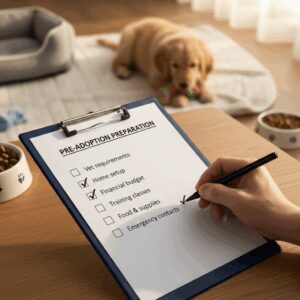
Before you even visit a shelter, prepare your safe room. Stock your supplies. Research local veterinarians and schedule a day-three appointment. When you bring your dog home, you won’t be scrambling—you’ll be executing a plan. That confidence, that preparedness, transmits to your dog as calm certainty. And calm certainty is exactly what a frightened shelter dog needs to transform into a confident, bonded family member.
The first 72 hours aren’t just about survival. They’re about building the relationship that will sustain you both for the next 10-15 years. Make them count.
Unlock Full Article
Watch a quick video to get instant access.